

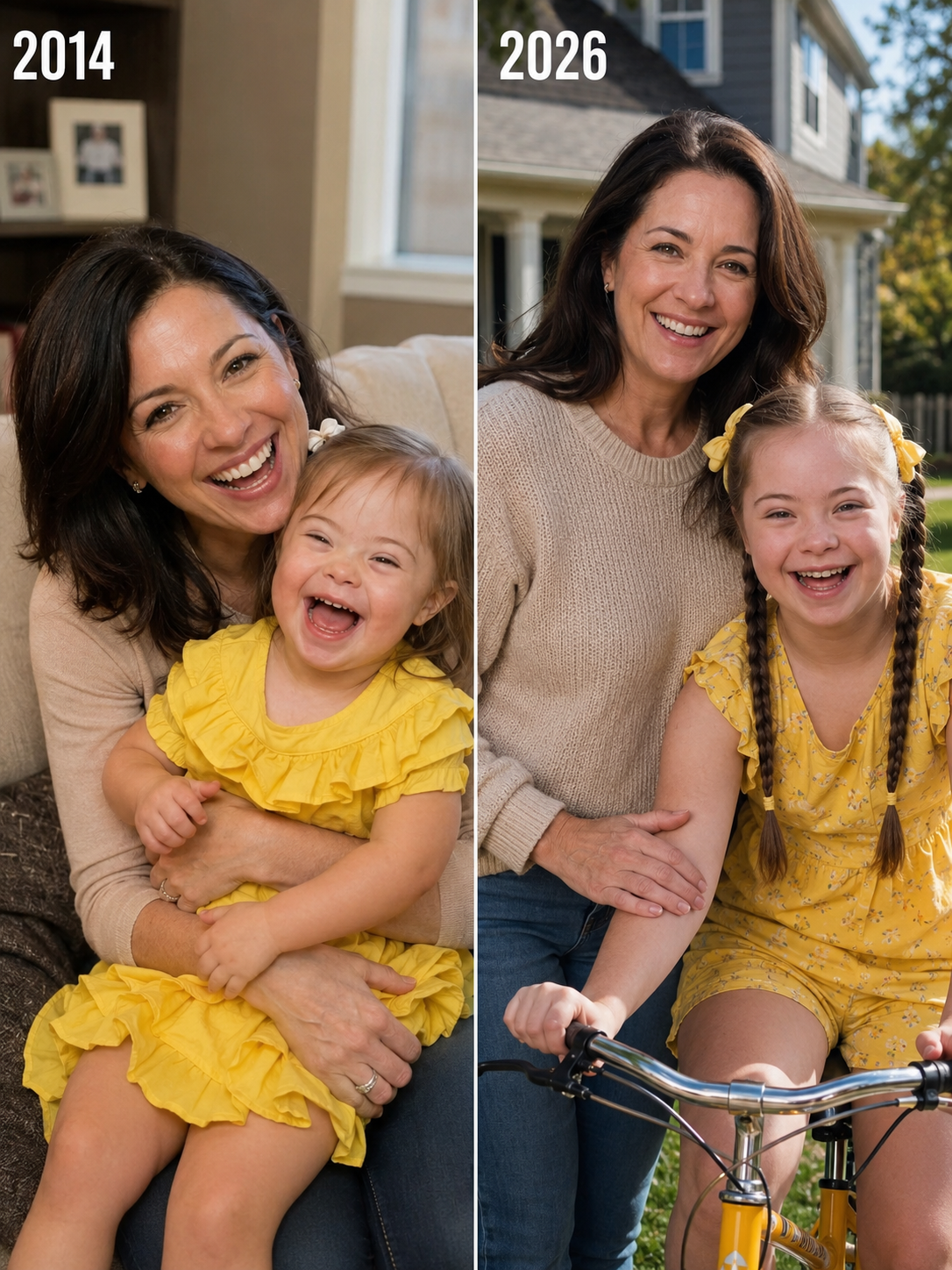
When I agreed to become a surrogate for another family, I believed I was helping them create the future they had always dreamed about. I never imagined that choice would spark a conflict that would return to our lives more than twelve years later.
The fluorescent lights in the grocery store had a way of blending every hour together until a double shift felt like one endless, humming day. I was 32 years old then, still living in a tiny studio apartment where the radiator rattled like it had opinions of its own, still slipping tip money into an envelope labeled “COLLEGE” tucked inside a shoebox beneath my bed.
I had left foster care at 18 carrying a garbage bag filled with clothes and a bus pass. Fourteen years later, I was still trying to understand what a real life was supposed to look like. My coworker, Marcy, noticed it before anyone else. She always did.
“Emma, honey, you’ve been on your feet for 12 hours. You’re swaying.”
“I’m fine.”
“You’re not fine. You’re saving for school at $12 an hour. That’s not a plan, that’s a slow drowning.”
I laughed because the alternative was crying into the produce section.
—
It was a regular customer—a quiet woman who bought the same yogurt every Tuesday—who first mentioned the surrogacy agency. She told me the compensation could change my life and slid a business card across the conveyor belt as though she were handing over a key. I kept it for two weeks before finally making the call.
—
I met the Hollisters in a sleek glass office overlooking the river. Richard was tall with silver hair, while his wife, Vanessa, wore pearls that looked older than I was.
They held my hands as if I already belonged to their family.
“We’ve waited so long for this,” Vanessa said. “You’re an answered prayer, Emma.”
“I just want to help, and honestly, I want to go to school. This would mean everything.”
“Then we’ll help each other,” Richard replied with a smile, though his eyes briefly flicked toward his watch.
I convinced myself I had imagined it.
We signed the contracts in a conference room. Mr. Pierce, the Hollisters’ attorney, pushed document after document toward me using a pen that probably cost more than my monthly rent. He never smiled, but lawyers rarely did, so I ignored that too.
—
The first trimester passed in a haze of saltine crackers and overtime shifts.
Vanessa attended the early appointments wearing soft sweaters and expensive perfume. She would rest a hand on my stomach and whisper:
“A healthy little one. That’s all we want. Just a healthy one.”
I’d nod.
I told myself every mother said things like that.
Back then, I told myself a lot of things.
Richard came to one appointment, checked his watch twice, and left before the ultrasound images were even printed. Vanessa apologized for him with a strained smile.
—
The week of the anatomy scan, halfway through the pregnancy, I went by myself. The technician was warm and chatty at first, talking about baby names and nursery ideas while moving the wand across my belly.
Then she became quiet.
Her smile disappeared as quickly as water slipping away.
She excused herself, and moments later the doctor entered. His voice was careful as he mentioned soft markers associated with Down syndrome and asked whether I could return for additional testing.
I gripped the edge of the examination table as a feeling I couldn’t yet identify began to build inside my chest.
—
The phone rang twice before Vanessa answered.
I was sitting on the edge of my bed, still wearing my work apron, the ultrasound photo bent in my hand.
“Vanessa, it’s Emma. The doctor called. They want us to come in together. It’s about the baby.”
There was a brief silence.
“We’ve already spoken with Dr. Nguyen,” she said. “Richard and I will meet you at our attorney’s office tomorrow. Mr. Pierce will explain everything.”
The call ended before I could even ask what needed explaining.
The office was filled with glass walls and gray carpeting.
Mr. Pierce sat behind a desk larger than my entire kitchen. Richard and Vanessa sat off to one side, refusing to meet my eyes.
“Emma, thank you for coming,” the attorney said. He pushed a folder toward me. “My clients have made a difficult decision. Given the diagnosis, they won’t be accepting the child after delivery.”
I stared at him.
I waited for someone to laugh.
I waited for someone to say they didn’t mean it.
“What do you mean, not accepting her?”
“Section nine of the surrogacy agreement you signed last spring,” Mr. Pierce replied, tapping the folder. “In the event of a confirmed fetal abnormality, my clients retain the right to decline placement. The infant will be transferred to the state foster care system following birth. My clients are released from all parental obligations,” the lawyer read.
It felt as though a bucket of ice water had been dumped over my head.
My ears rang.
“You can’t be serious!”
I turned toward Vanessa.
“She’s a baby, your baby!”
Vanessa calmly folded her hands in her lap.
“We wanted a family, Emma. Not a project.”
Richard finally lifted his eyes.
He looked tired.
Not remorseful.
“It’s better this way. For everyone.”
I walked out without signing a thing.
I didn’t have to.
That clause had been sitting inside the contract from the day I first signed it, long before any of us thought we’d ever have reason to read it again.
I made it to the parking garage before my knees gave out beneath me.
The rest of the pregnancy passed in a haze of overtime shifts and silent fear.
One afternoon, Marcy found me crying in the break room. She didn’t ask questions. She simply sat beside me holding a paper cup filled with terrible coffee.
“Whatever it is, kid,” she said, “you don’t have to figure it out tonight.”
I kept working until my swollen ankles barely fit inside my shoes.
I read everything I could about foster care, even though I already knew that world firsthand.
At one of my final appointments, Dr. Nguyen squeezed my hand.
“She’ll be loved, Emma.”
I didn’t respond.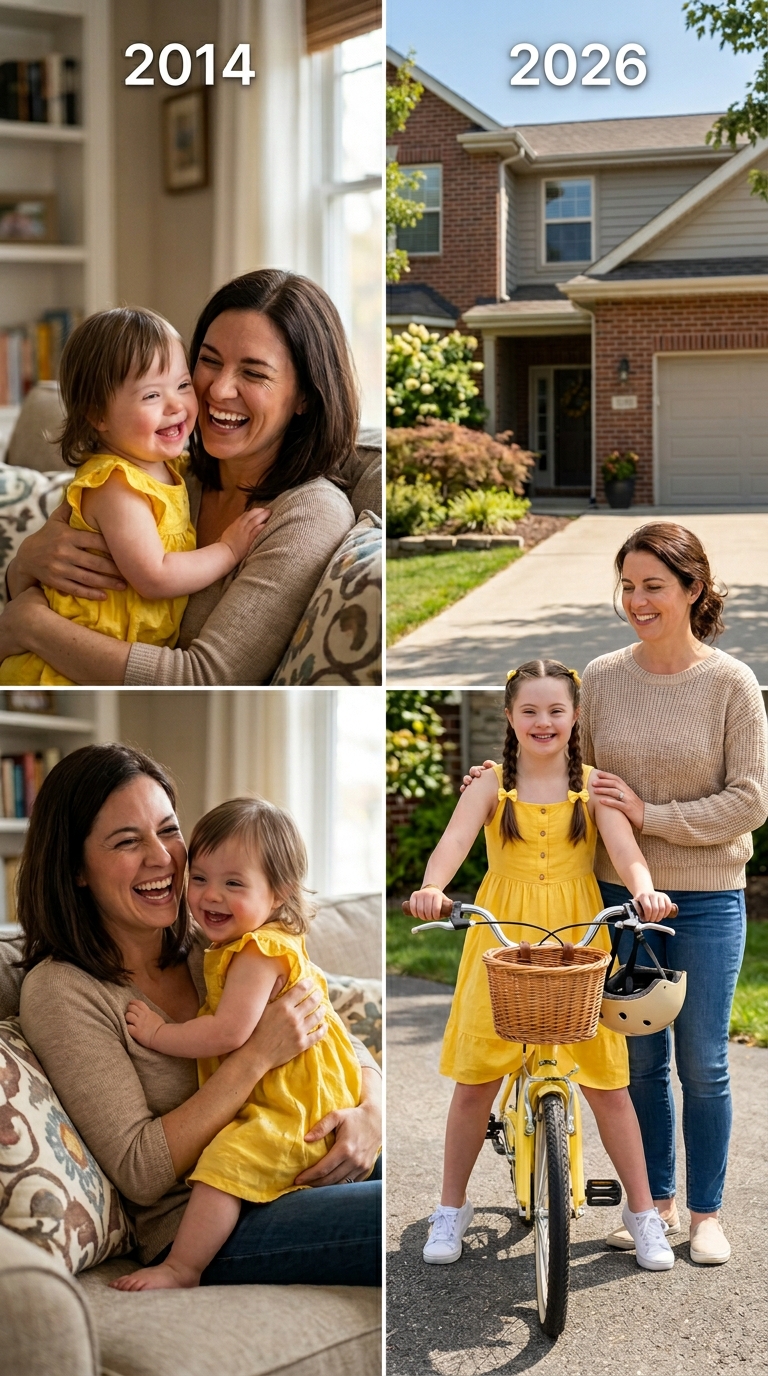
But somewhere deep inside, a single word had already begun to take root.
Mine.
The delivery room was bright and noisy until suddenly it wasn’t.
They placed the baby girl on my chest, and her tiny fingers wrapped around mine as though she’d been waiting for me all along.
I looked into her face and knew.
Later, a social worker entered carrying a clipboard.
Behind her, Mr. Pierce lingered in the doorway like a shadow.
“Emma, if you’re prepared to sign the release —”
“I’m not releasing her,” I said, cutting the social worker off.
The room fell silent.
Mr. Pierce stepped forward.
“You’ll regret this. You have nothing. No family, degree, or support. Do you understand what you’re taking on?”
I looked down at my daughter and gently touched the soft dark hair near her temple.
“Her name is Lily,” I whispered. “And I already know I won’t.”
The attorney left without another word.
A nurse brought me a different stack of paperwork, and my hand shook so badly I could barely hold the pen.
Still, I signed every page.
Then I carried Lily home by myself, having no idea how heavy the years ahead would become.
Twelve years passed faster than I ever imagined.
Lily and I were sitting at the kitchen table eating pancakes, with the syrup bottle between us like it was every Saturday morning.
She was twelve now, nearly as tall as I was, with a laugh that filled every room of our small house.
Three years earlier, I had completed my associate’s degree through night classes, thanks to the support of coworkers and Marcy.
Lily was thriving in school, surrounded by teachers who adored her and friends who argued over who got to sit beside her at lunch.
Then there was a knock at the door.
I wiped my hands on a dish towel and opened it without a second thought.
Then I froze.
Richard and Vanessa stood on my front porch.
They were smiling as if they had simply stopped by for coffee.
“Hello, Emma,” Vanessa said. “May we come in?”
They didn’t wait for permission.
They walked straight into my living room as though the house belonged to them.
“Sweetheart,” Vanessa called into the house, her voice dripping with sweetness. “We can finally be together!”
Lily appeared, still holding her pancake fork.
She didn’t speak.
She simply looked at them.
“Get out of my house,” I said. “How did you even find me?!”
“We hired someone,” Richard replied without a trace of regret. “A good investigator. It only took a few weeks.”
He raised his hands as though trying to calm the situation.
“Emma, please. We’ve had a lot of years to think about what happened.”
“What happened,” Vanessa said gently, “is that we were grieving. We’d been through three failed rounds. We weren’t ourselves. And you, well, you took advantage of that.”
I laughed despite myself. It came out harsh and bitter. “I took advantage of you?” I asked.
“You were pushy,” Richard said. “You pressured us into a decision we never would’ve made if we’d been clearheaded.”
“You signed papers,” I replied. “Your attorney sent papers. You told a doctor you didn’t want her!”
Vanessa’s expression never changed.
“We’ve spoken with new counsel. Richard’s family attorneys believe a court would be very sympathetic to parents who were manipulated during a vulnerable medical crisis.”
“We have resources, Emma,” added the man who had once intended to become Lily’s father. “We have connections. We’d rather not use them. But Lily belongs with her real family.”
My hands began to shake. Years of double shifts, school concerts, illnesses, homework, and unconditional love seemed to swirl around me as though none of it mattered.
“You gave her up,” I said. “You have no right! None!”
“Biology says otherwise,” Vanessa answered.
“Biology didn’t sit up with her at three in the morning when she had pneumonia!” I shouted.
“Emma,” Richard said, his tone hardening, “don’t make this harder than it needs to be.”
I was ready to yell again, but Lily stepped calmly into the center of the room. She looked composed, as though she had been preparing for this day forever.
“Excuse me,” she said.
Both of them turned toward her, instantly putting on the sweet smiles adults often reserve for children.
“I’ve been saving something for you all this time,” my daughter said.
Vanessa clasped her hands together, and Richard’s face brightened.
“Oh, sweetheart,” Vanessa cooed. “Is it a gift for us?”
Lily nodded.
Then she turned and disappeared down the hallway toward her room.
I stood frozen, my heart pounding. I had no idea what she was about to bring back. The Hollisters, smiling confidently on my couch, knew even less.
A few minutes later, Lily returned carrying a dusty shoebox. She walked directly to Vanessa and placed it in her hands.
“Open it,” she said.
Richard leaned closer, smiling as if he expected a child’s artwork.
Vanessa lifted the lid.
Her smile vanished instantly.
Inside were carefully organized documents, each sealed in a protective sleeve.
The surrogacy contract.
Mr. Pierce’s letter ending their claim.
A notarized statement showing Vanessa had refused custody.
Printed emails in which Vanessa referred to the pregnancy as “a defective investment,” copied years earlier to my clinic address when I was still considered “the carrier.”
Richard inhaled sharply.
“No! This can’t be! How dare you?!” Vanessa screamed.
Lily remained perfectly calm.
“I found this box when I was 10,” she said quietly. “You know I’ve been asking about my dad since I was seven. And you know I do debate, and that podcast unit at school. I read every page. I organized it as my civics project last summer. I’ve been saving the truth for the day you tried to come back.”
I stared at my daughter in disbelief.
A twelve-year-old with more composure than I had ever possessed.
Suddenly, everything made sense—the questions about Mr. Pierce, her casual curiosity about what a notary was, the countless library visits.
I had answered every question without realizing she was assembling the entire story.
Richard opened his mouth, but no words came out.
Vanessa’s hands trembled as she clutched the box.
“You can call your attorneys,” Lily added. “I made copies.”
With nothing left to say, they abandoned the box and left without another word.
The front door clicked shut.
Silence filled the house.
I sank onto the couch, still shaking.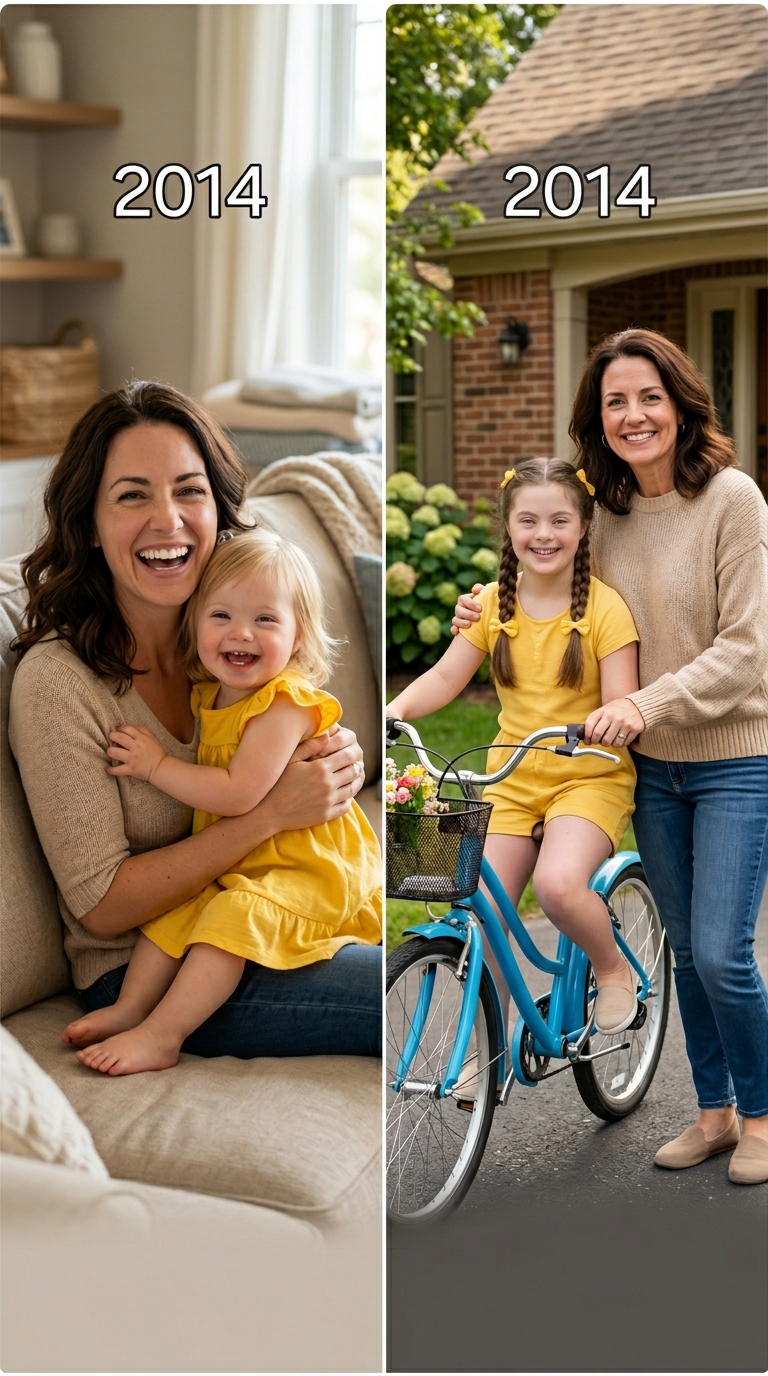
Lily wrapped her arms around me from behind and rested her cheek against my hair.
“Don’t cry, Mom.”
“I didn’t know you knew,” I whispered. “All those questions – I should’ve seen the truth.”
“I was guarding us, Mom.”
I pulled her into my lap the way I had when she was little, and she let me.
“You chose me,” my daughter said. “That’s the only family that ever mattered.”
The little girl they had rejected had grown into someone strong enough to defend the mother who had never been given a fair chance.
And deep inside, the frightened young woman who had once aged out of foster care finally felt herself breathe again.
