

PART 1
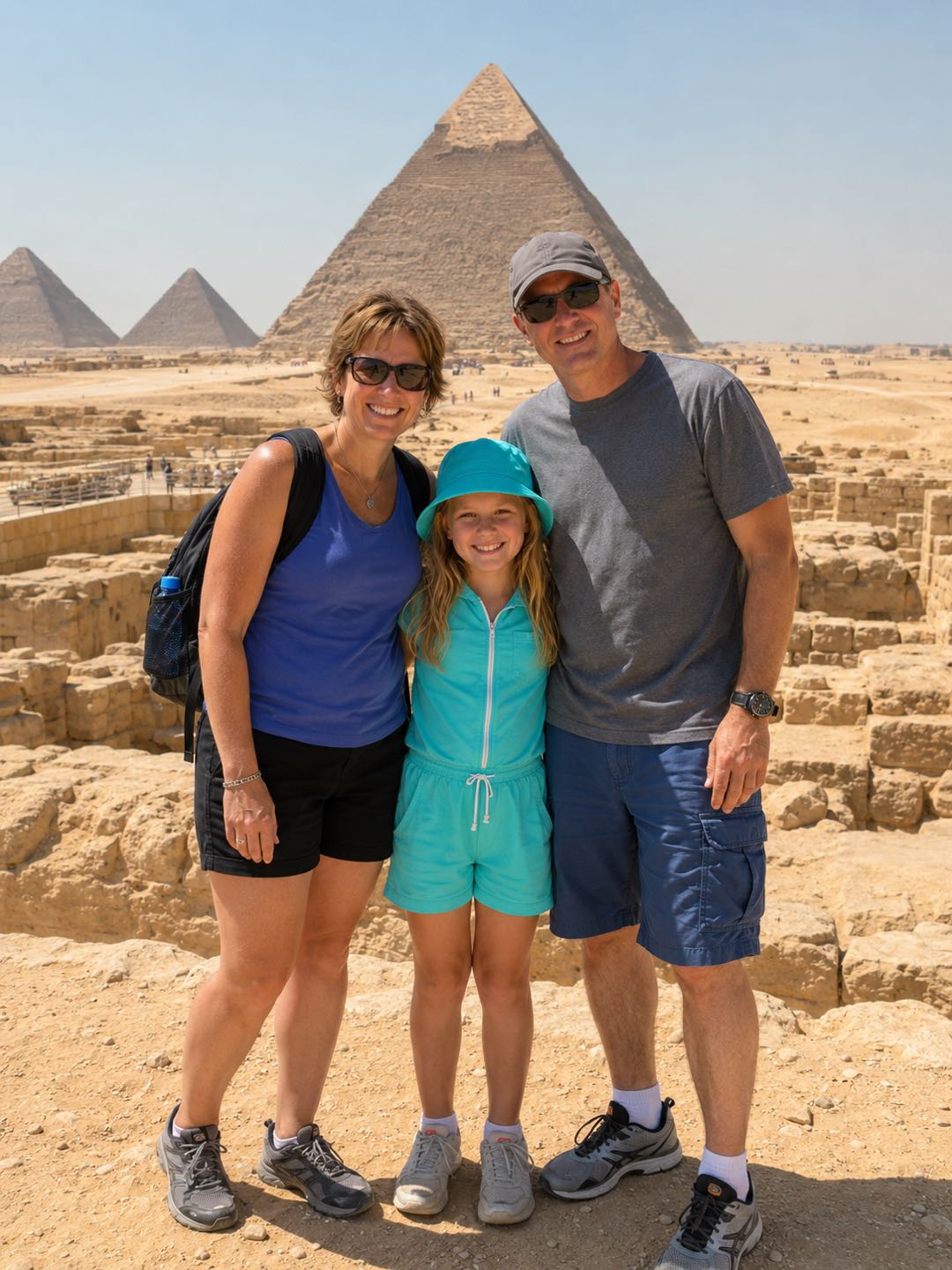
For two decades, I believed my daughter had vanished from a garden in Cairo.
Then, one day, a postcard from Egypt arrived with an address located only three miles from my home in Ohio.
I assumed it would be another painful reminder of the past.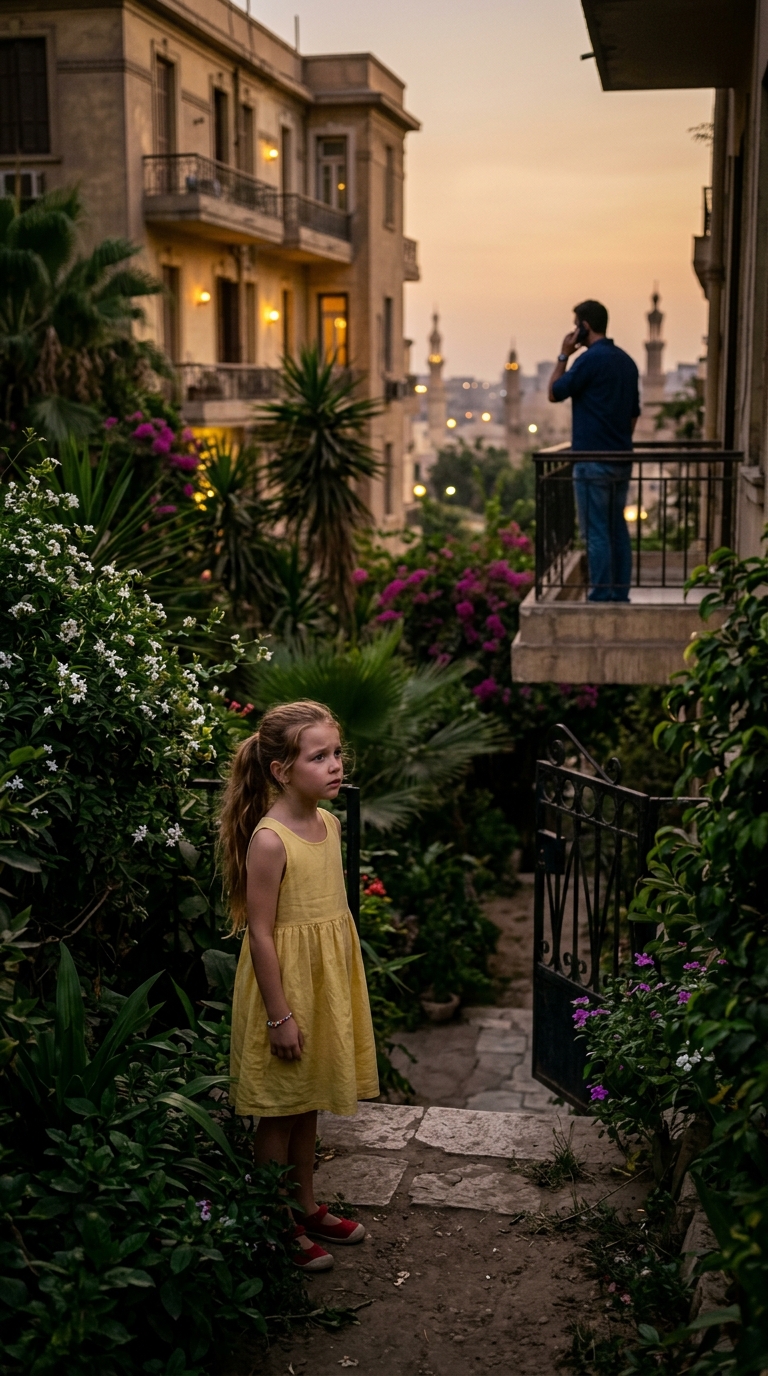
Instead, what waited for me uncovered a truth that someone I once trusted had concealed for years.
The postcard carried a Cairo postmark, yet the address written on the back was local.
There was no signature.
No explanation.
Only a single sentence written in neat block letters:
“Come alone if you still want the truth about Tara.”
My daughter had disappeared in Cairo when she was eight years old.
Now, twenty years later, I was driving toward a line of rental storage garages with that postcard resting on the passenger seat and my heart hammering in my chest.
I located unit forty-two, lifted the cold metal door, and braced myself for the worst.
Instead, I sank to my knees.
A woman sat on a folding chair beside three cardboard boxes.
She had my eyes.
She looked at me as though she had spent her entire life deciding whether to hate me.
“You came quickly, Cassidy,” she said.
I could barely catch my breath.
“Tara?”
Her lips trembled slightly, but she stayed where she was.
“I needed to know if you would come.”
PART 2
Twenty years earlier, my husband, Grant, accepted a reporting job overseas and moved our family to Cairo.
We rented a small second-floor apartment overlooking a garden below, and Tara loved spending every afternoon playing there.
For a while, I truly believed we were happy.
Then that Tuesday arrived.
I kissed Tara goodbye before heading to work while Grant remained home to write.
“I’ll watch her,” he said.
But when I returned that evening, police vehicles were parked outside our building.
Grant told me Tara had gone downstairs to play and vanished after he looked away for only a few minutes.
For weeks, the search continued.
Police officers, neighbors, and complete strangers called her name through the streets.
Nothing came back.
No witnesses.
No leads.
No Tara.
Grant cried in public and blamed himself.
Yet at night, he became strangely withdrawn.
After a year, we returned to Ohio without our daughter.
Our marriage did not survive the loss.
Twenty years later, Grant had built an entire career from our tragedy.
He wrote books.
He delivered speeches about grief and loss.
Meanwhile, I built my life around waiting.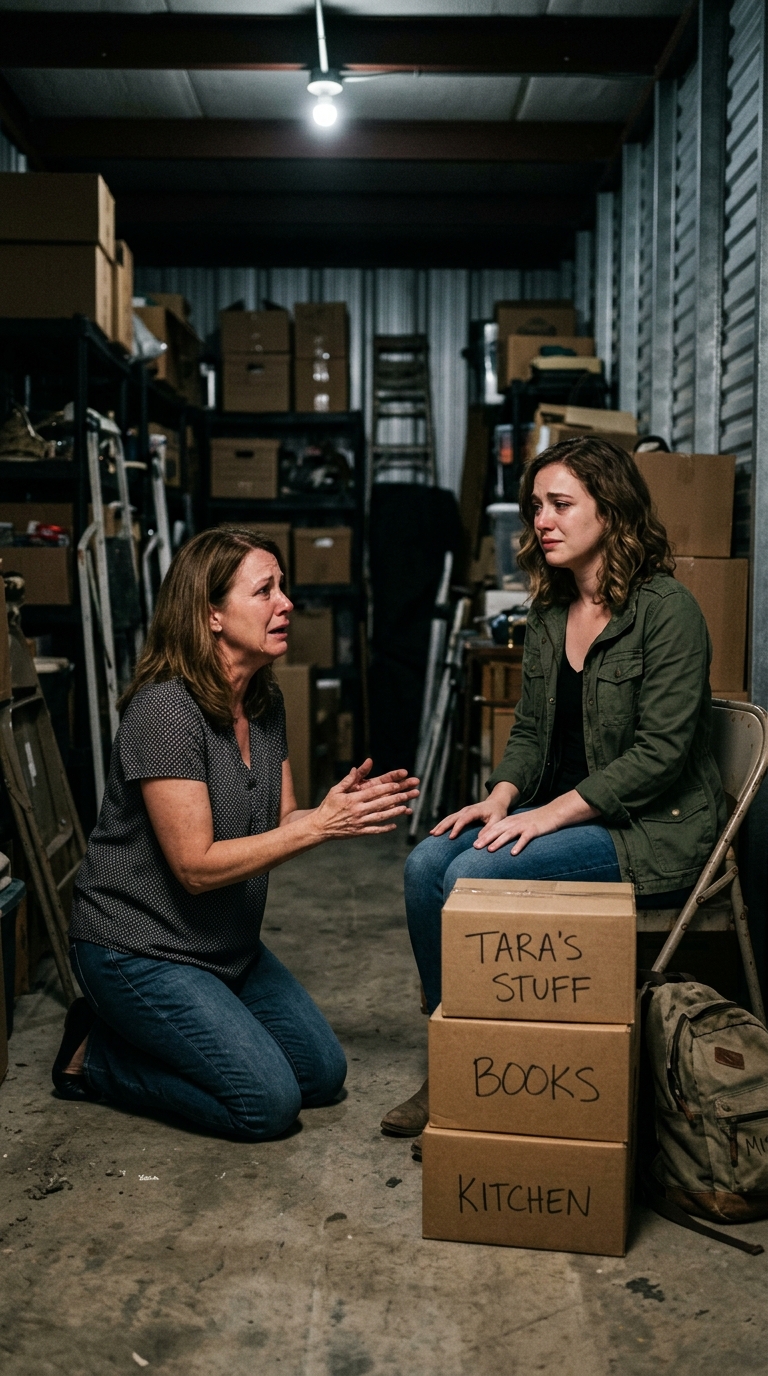
Then the postcard arrived.
And everything changed.
Inside that garage, Tara told me she had grown up believing that I had abandoned her.
She showed me letters she had written every birthday from the age of nine until eighteen.
Letters I had never seen.
Then she revealed the truth.
Claire, Grant’s trusted friend, had taken her from the garden.
Grant had gone to Claire’s apartment that very night.
But instead of bringing Tara home, he told her I was gone.
Claire raised Tara under a different name.
Before Claire died, she confessed everything in a letter.
Grant had wanted out of our marriage.
He wanted Claire.
He wanted Tara too.
But he did not want to appear to be the man who abandoned his wife and daughter in another country.
“He chose himself,” Tara said.
And with those three words, the pieces of my past finally fell into place.
PART 3
That evening, Grant was scheduled to appear at a public event promoting his newest book, *The Daughter I Lost in Cairo*.
Tara showed me the advertisement on her phone.
Her voice was icy.
“He made money from missing me.”
“No,” I said. “He made money from hiding you.”
Before the event began, we went to Grant’s house.
When he opened the door and saw Tara standing there, every bit of color drained from his face.
“Tara,” he whispered.
“You remember my name,” she said. “That’s more than I expected.”
Grant tried to explain himself.
I stopped him.
“You are done deciding what we get to hear.”
At the event, Grant stood before a packed audience reading passages about the heartbreak of losing a child.
Then Tara stepped into the aisle.
“Was that before or after you left me at Claire’s apartment?” she asked.
The room instantly fell silent.
Tara placed Claire’s confession, her birthday letters, and Grant’s written notes on the table.
“My name is Tara,” she said. “I’m the daughter he claims he lost in Cairo. He didn’t lose me. He hid me.”
A reporter asked Grant whether he denied the accusation.
He looked around helplessly and claimed he had only been trying to protect everyone.
I stood beside Tara.
“You protected your reputation,” I said. “You destroyed our lives.”
Later that night, Tara came home with me.
I opened the cedar box I had kept untouched for twenty years.
Inside were her ribbons, her tiny red shoes, a pancake recipe card, and old missing-person posters softened by time.
“I kept what I could,” I told her. “Proof that you were loved.”
The next morning, I made pancakes.
The first one burned.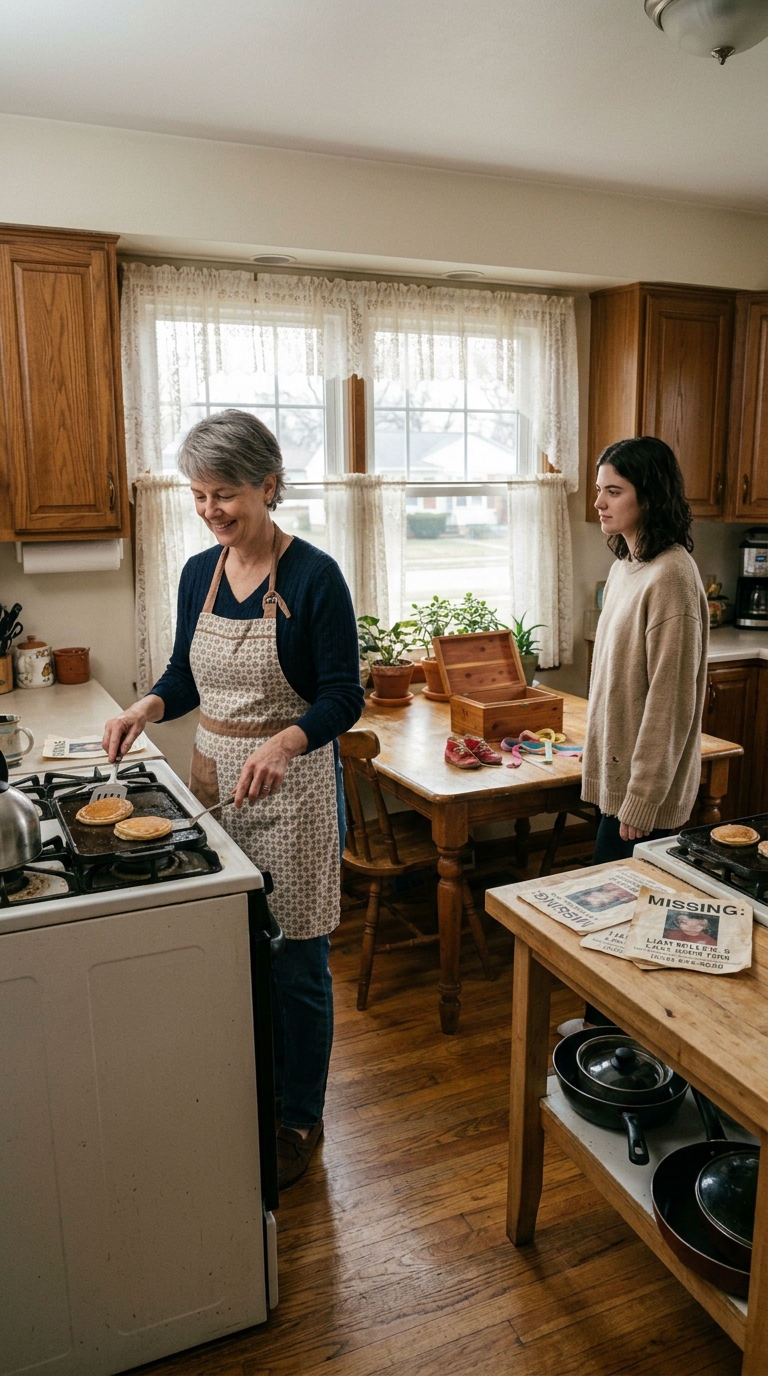
The second one fell apart.
But by the third, Tara walked into the kitchen wearing my old sweater.
“I’m not ready to call you Mom,” she said quietly.
The words hurt.
But they were honest.
“Then call me Cassidy,” I said. “That’s enough for me.”
For twenty years, I believed Egypt had taken my daughter from me.
But it wasn’t Egypt.
It was a lie.
And in the end, the truth brought Tara back to my table.
