

Part 1
At 18 years old, Beatriz Salvatierra was sold in a salon filled with candelabras, fans, and poisonous smiles.
There was no market or auction cries, but everyone in Mexico City’s high society understood the price: her father’s gambling debts, promissory notes signed with other people’s blood, and a marriage contract that smelled more like a sentence than a wedding.
“Congratulations, my girl,” her stepmother whispered in her ear as she adjusted the necklace of fake pearls. “You’re going to save us from ruin.”
Doña Mercedes Villaseñor, her father’s second wife, smiled as if she had just won a card game. She wore dark red lipstick, had cold eyes, and possessed that cruel elegance of women who know how to destroy without raising their voice.
Beatriz did not respond.
Across the salon, her father, Don Arturo Salvatierra, avoided looking at her. Years earlier, he had been the owner of a hacienda in Querétaro, respected by politicians, bankers, and military officers. But his true passion was not the land or his family, but the gambling tables, expensive mezcal, and absurd bets in private clubs where ruined men continued to pretend they were still great.
First he sold the horses.
Then the jewels of Beatriz’s deceased mother.
Then he mortgaged the hacienda.
And when he had nothing left, he sold his daughter.
“You will marry Don Ricardo Monteverde,” Mercedes announced that morning in the study that smelled of old tobacco and defeat.
Beatriz felt the floor disappear beneath her feet.
“The owner of Hacienda La Encarnación?”
“The same one,” Mercedes replied. “One of the richest men in the country.”
“They call him the Beast of the Sierra.”
Her stepmother let out a dry laugh.
“And you should be grateful that this beast is willing to take on your father’s debts.”
Everyone knew the rumors about Ricardo Monteverde. They said he was enormous and deformed, that he weighed more than 150 kilos, that he lived locked away in a hacienda lost among the hills of Hidalgo, that he devoured whole animals, and that he had gone mad after the mysterious death of his younger sister. The girls mentioned him in hushed voices, as if invoking a ghost.
Beatriz had believed she loved another man: Julián Aranda, a handsome young man with a perfect smile and gentle hands. He had danced with her three times at the Casino Español, promised to rescue her, and told her that a woman like her deserved a palace, not a house full of creditors.
But when Julián saw the debt books of Don Arturo, he disappeared without saying goodbye.
“Romantic men are romantic until they see an empty bank account,” Mercedes said with contempt. “Don Ricardo, on the other hand, has already paid everything.”
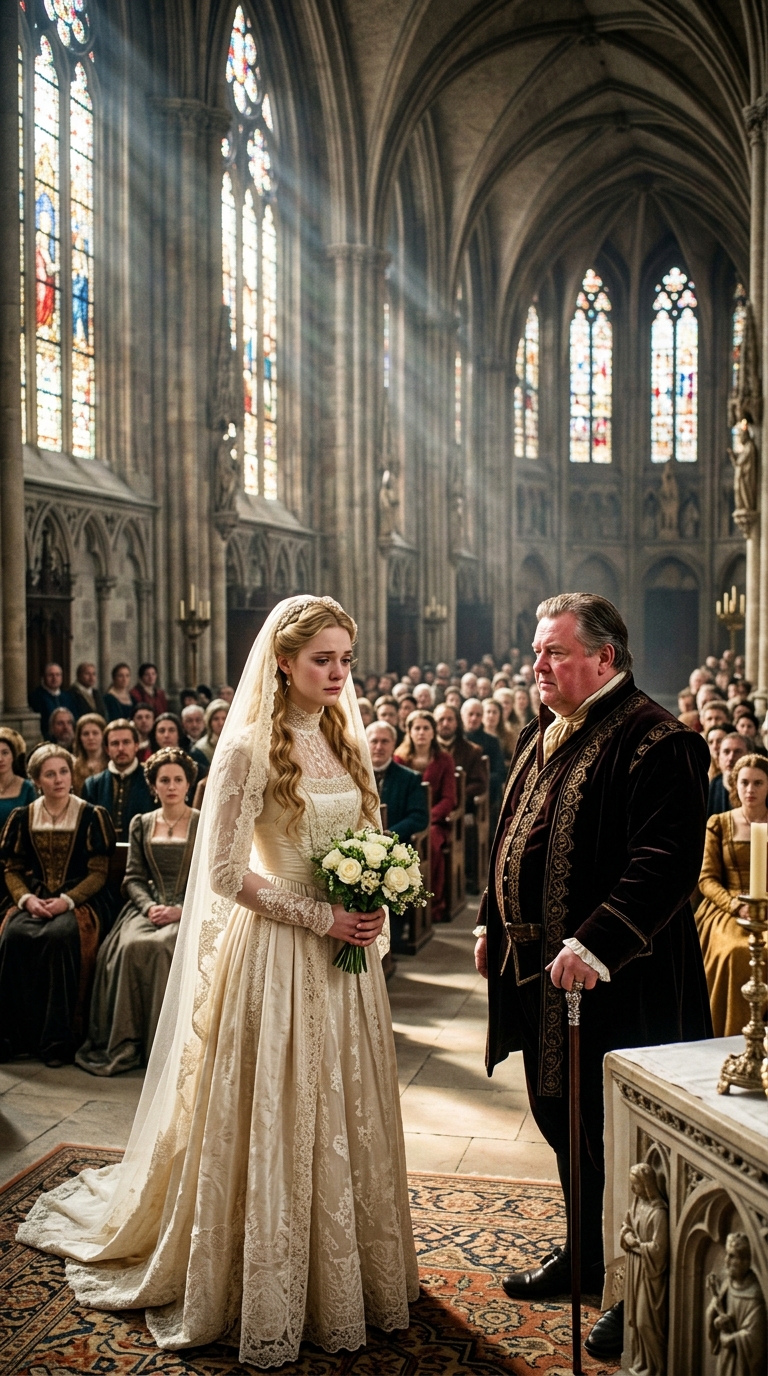
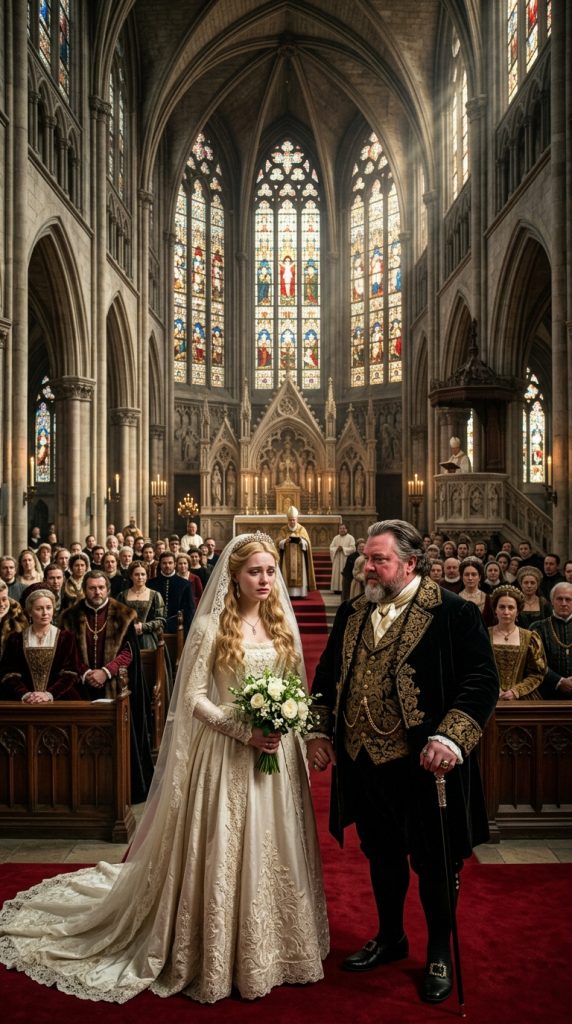
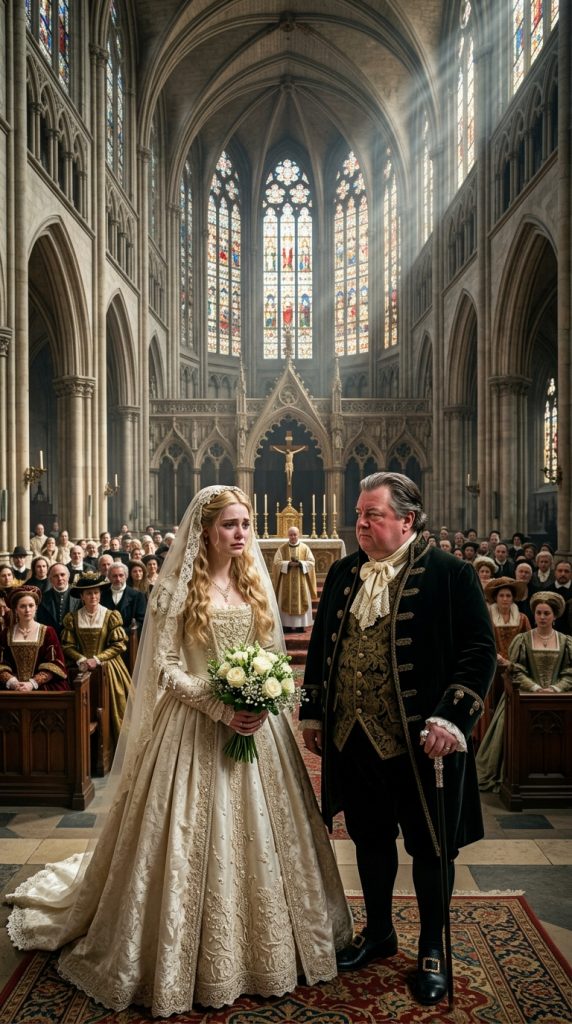
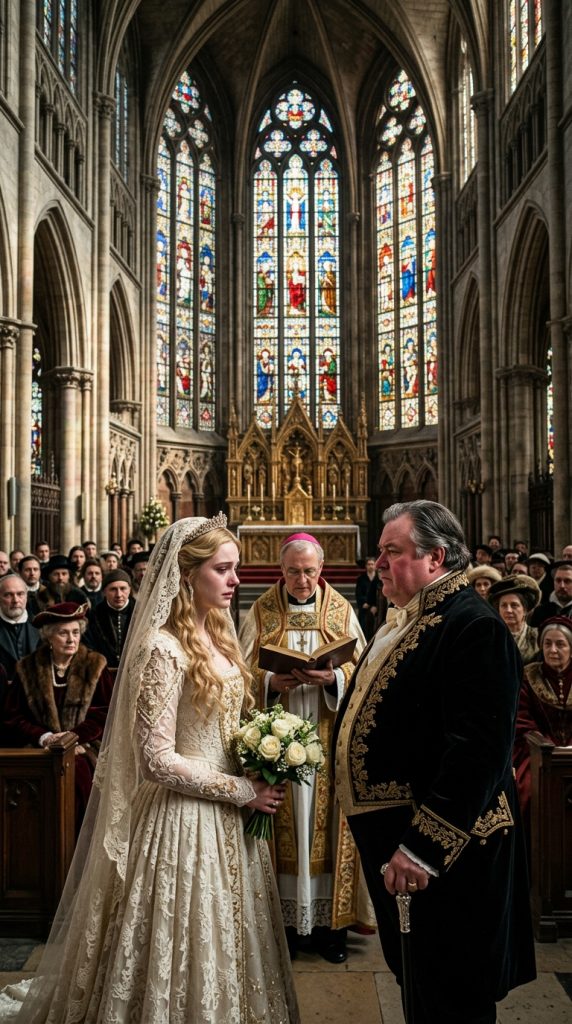
The wedding took place three weeks later in an old church in the Historic Center. Outside, it was pouring rain. Inside, the richest families in the country had filled the pews not out of affection, but out of morbid curiosity.
They wanted to see the ruined girl hand herself over to the monster.
Beatriz walked to the altar in an ivory satin dress that weighed on her like a shroud. Her father led her by the arm, but his hand trembled so much that it seemed she was the one holding him up.
Then she saw Ricardo.
He was immense.
He stood leaning on a silver cane, breathing with difficulty. His impeccably tailored black suit could not hide the volume of his sick body. His face was pale, his forehead damp, and his movements slow and painful.
But his eyes were not those of a monster.
They were clear, intense, and alert. The eyes of a man who had seen too much and slept very little. When she placed her hand in his, Ricardo held it with unexpected gentleness.
“Don’t be afraid,” he murmured so softly that only she could hear. “I did not come to harm you.”
Beatriz wanted to believe him, but no one in her life had ever kept a promise.
After the ceremony, there was no banquet. Ricardo ordered them to leave immediately for the hacienda. The journey lasted hours. The rain beat against the carriage, the dark fields passed like shadows, and neither of them said a word.
Hacienda La Encarnación appeared at dusk like a fortress of quarry stone, surrounded by magueys, bare jacarandas, and black mountains. The servants moved in silence, as if everyone inside that house had learned not to awaken something terrible.
The housekeeper led her to an enormous room with a carved wooden bed, red curtains, and an ancient crucifix on the wall. When they left her alone, Beatriz stood by the fire, trembling.
She waited.
The doorknob turned.
Ricardo entered without his jacket, wearing a white shirt and carrying his cane. His size seemed even more imposing in the dim light. Beatriz instinctively stepped back.
He noticed.
“I terrify you,” he said in a deep voice. “And you have every right.”
She lowered her eyes.
Ricardo crossed the room, not toward her, but toward a reinforced armchair beside the fireplace. He dropped into it with a sigh of exhaustion and pointed to a chair facing him.
“Sit down, Beatriz. Tonight we are going to talk without lies.”
She obeyed, rigid.
He took out a bundle of papers and placed them on the table.
“Your father did not sell me a wife. I bought time. For you and for me.”
Beatriz looked at him without understanding.
“Julián Aranda did not want to marry you out of love,” Ricardo continued. “He wanted your inheritance.”
“I don’t have an inheritance.”
“Yes, you do. Your mother was the sole heiress to the Escandón lands, north of Querétaro. Your father planned to claim those properties when you turned 21 and then lose them at a gambling table. Julián discovered it first.”
Beatriz felt a chill.
Ricardo picked up another document.
“Four years ago, Julián courted my sister Isabel. She ran away with him. Six months later she died. They said it was fever. A lie. They poisoned her slowly to take her dowry.”
“No…”
“Yes. And you were going to be next.”
The air became suffocating.
Ricardo coughed violently, covering his mouth with a handkerchief. When he pulled it away, Beatriz saw a dark stain.
“What’s wrong with you?” she asked.
He smiled bitterly.
“The same thing that happened to Isabel, only slower. My uncle Horacio Monteverde has been poisoning me for years. He couldn’t kill me quickly, but he destroyed my body. People think I’m fat from gluttony. The truth is my heart is failing and my body is filling with water. I’ve been drowning from the inside.”
Beatriz remained motionless.
“Why did you marry me?”
Ricardo looked at her with an intensity that pierced her chest.
“Because I need someone who won’t break. Someone intelligent, young, underestimated. My uncle is waiting for my death to take the hacienda, the mines, and the entire towns that depend on us. Julián is waiting to finish with you and take your fortune. I protected you from his knife. In return, I need you to learn to carry on my war when I no longer can.”
Beatriz, sold that morning as a useless burden, felt for the first time that someone saw something more in her.
“You will not share my bed,” Ricardo said. “You will share my study. Tomorrow your education begins.”
Part 2
At dawn, Beatriz did not wait to be called. She dressed in a simple blue wool suit and crossed the silent hallways to Ricardo’s study, a huge room filled with maps, books, accounts, telegrams, and mine plans.
He was already there, breathing with difficulty behind a mahogany desk.
“You arrived early.”
“You said you have little time left,” she replied. “It would be absurd to waste the morning.”
For the first time, Ricardo smiled.
For weeks, he taught her everything: the accounts of the silver mines in Pachuca, the contracts with the workers, the bribes to political bosses, the railway routes, the names of loyal administrators and traitors.
Beatriz learned with a speed that surprised him.
One afternoon, while reviewing an account book, she pointed to a line with her finger.
“There is money missing here.”
Ricardo looked up.
“Explain.”
“Silver production dropped 30%, but transportation costs rose. That doesn’t make sense. Either they’re lying about production, or someone is selling ore on the side.”
Ricardo closed his eyes for a moment.
“My auditor took two months to find that.”
“Who manages that mine?”
“A man recommended by my uncle Horacio.”
Beatriz closed the book firmly.
“Then he must go today.”
From that day on, she stopped being the trembling girl from the church. She became Ricardo’s eyes and voice. She signed letters, gave orders, confronted administrators, corrected accounts, and fired thieves.
But the more they advanced, the worse he became.
There were nights when Ricardo could not lie down because he was suffocating. Beatriz stayed by his side, reading reports to him in a low voice, giving him bitter medicines, and wiping the cold sweat from his forehead. Little by little, she stopped seeing the Beast of the Sierra.
She saw a brilliant, sarcastic, wounded, and deeply lonely man.
The attack came in February.
Beatriz was in a meeting with the hacienda’s lawyer when the salon doors burst open. Horacio Monteverde entered—tall, thin, dressed with exaggerated elegance. Beside him was his wife, Doña Amparo, and behind them an unknown doctor with a black medical bag.
“I’ve come to see my nephew,” Horacio demanded. “I’m told he is incapacitated. If he cannot manage his assets, I will assume administration.”
Beatriz rose slowly.
“You are forbidden from entering this house.”
Horacio let out a cruel laugh.
“Don’t play lady of the house, girl. We all know what you are. A poor thing sold to warm the bed of a dying man.”
Beatriz felt the sting of those words, but she did not move.
“Take one more step toward the stairs and before nightfall you will be ruined.”
Horacio smiled.
“You?”
She pulled a paper from her sleeve.
“Three days ago I bought all your promissory notes. You owe 200 thousand pesos to moneylenders in the capital and Veracruz. In addition, I have the signed confession from the mine administrator stating that you ordered the theft of ore for years.”
Horacio’s smile died.
“You’re lying.”
“Try your luck.”
The doctor retreated toward the door. Beatriz then saw a plaque on his bag: “Dr. Silvano Cruz.”
Cruz.
The same surname as the doctor who had signed Isabel’s death certificate.
Suddenly everything fell into place.
“You did not come to examine my husband,” Beatriz said in an icy voice. “You came to finish the job.”
The doctor turned pale.
“Guards!” she shouted. “Close the door!”
Ricardo’s trusted men entered immediately. Horacio tried to draw a small pistol, but they brought him down before he could aim. Doña Amparo screamed. The doctor dropped the bag.
From the stairs came a deep voice.
“Take them to the cellar.”
Ricardo was standing there, pale as wax, gripping the railing. He had come down despite being unable to breathe. His eyes burned with authority.
“Ricardo,” Horacio stammered. “Your wife is crazy.”
“My wife has just saved my life.”
Then Ricardo’s strength gave out. Beatriz ran and held him up as best she could.
“Help me!”
They carried him to the study. They sent for a federal investigator whom Ricardo had supported years earlier. For two days, no one left or entered the hacienda. Beatriz interrogated the doctor with documents, evidence, and legal threats until he broke.
He confessed.
Horacio and Julián Aranda had planned everything. The doctor carried a dose capable of stopping Ricardo’s heart. He would then declare it a natural death. Julián would receive part of the mines and then come for Beatriz.
When the agents arrived from the capital, they found the evidence ready.
Horacio was arrested.
The doctor as well.
Julián tried to flee toward Veracruz, but he was captured before boarding the ship.
The war seemed won.
But Ricardo was still dying.
Part 3
The hacienda’s trusted doctor, Don Efraín Luján, examined Ricardo for hours. When he left the room, his face was serious.
“The poison is still in his body. If we do nothing, he will die. If we try to cleanse it, perhaps he will die as well.”
Beatriz did not look away.
“Then we try.”
The following days were hell. Ricardo sweated, delirious, screaming his dead sister’s name. His body, swollen from years of poison, began to expel fluid slowly. They gave him infusions, hot baths, medicines that smelled of sulfur and bitter herbs.
Beatriz did not leave his side.
The servants begged her to rest, but she remained there, sitting beside the bed, holding his hand when the convulsions struck.
One early morning, during a storm, Ricardo stopped breathing properly. Don Efraín lowered his head.
“He’s leaving us.”
“No,” Beatriz said.
She climbed onto the bed, took Ricardo’s face in her hands, and spoke to him with a strength she did not know she possessed.
“Ricardo Monteverde, you did not take me out of a house full of wolves just to leave me alone in this one. You promised me a war. You promised me a study. You promised you would not lie to me. So breathe. Breathe right now.”
For a moment, nothing happened.
Then Ricardo’s chest moved.
Once.
Again.
Then, with a broken sound, he began breathing once more.
Beatriz cried for the first time since the wedding.
Months later, the Beast of the Sierra began to disappear.
The weight everyone had called gluttony gradually reduced. His face regained color. His legs supported him again. He left the silver cane in a corner of the study and one morning walked alone to the garden.
Beatriz saw him under the sun, taller than she remembered, still broad-shouldered, but strong, alive, and imposing. He was not a monster. He never had been.
He was the man she had learned to love.
When Ricardo was fully recovered, they returned together to Mexico City. The society that had mocked them fell silent when they saw them enter the grand ball at the Palacio de Iturbide.
Beatriz wore a dark blue dress and the ancient Monteverde jewels. Ricardo walked beside her, upright, elegant, with a presence that forced everyone to step aside.
“Lift your chin,” he murmured to her. “Let them see the true lady of this house.”
That night, Mercedes appeared among the columns.
“So now you think you’re a great lady,” she said venomously. “Don’t forget where you came from.”
Don Arturo stood behind her, aged and defeated.
Mercedes lowered her voice.
“I know your marriage was never consummated. I can destroy you with a scandal. I want money.”
Before Beatriz could respond, Ricardo appeared at her side.
“If you approach my wife again, Doña Mercedes, I will buy every one of your debts and ensure you spend the rest of your days in prison for extortion.”
Mercedes turned pale.
Don Arturo took her by the arm and they fled without looking back.
That night, upon returning to the house in the capital, Ricardo led Beatriz to his study. On the table were papers.
“These are annulment documents,” he said in a deep voice. “Your inheritance has been recovered. I have also placed a fortune in your name. You no longer need to be my wife. You are free.”
Beatriz felt her heart breaking.
“Free from you?”
“Free from a decision others made for you.”
She took the papers, looked at them for a few seconds, and threw them into the fire.
Ricardo opened his eyes in surprise.
“Beatriz…”
“You were the first who did not see me as currency. The first who believed in my mind before my beauty. The first who gave me a war and not a cage.”
He took a step toward her.
“Don’t stay out of gratitude.”
“I’m not staying out of gratitude.”
Beatriz lifted her face, tears shining in her eyes.
“I’m staying because I love you.”
The silence filled with something warm, fragile, and powerful.
Ricardo took her hands.
“I have loved you since the night you looked at me without pity.”
Years later, Hacienda La Encarnación was no longer known as the house of the Beast. It became a school for orphaned girls, a clinic for mine workers, and a prosperous hacienda where the peons received fair wages.
Beatriz managed the accounts with a firm hand.
Ricardo consulted her on everything.
They had two children, but they never let anyone say that she had been saved by him.
Because the truth was different.
They had saved each other.
And every time someone asked how their story began, Beatriz smiled and said:
“They led me to the altar thinking they were handing me over to a monster. But what I found was a wounded man… and inside me, a strength that no one had been able to buy.”
