

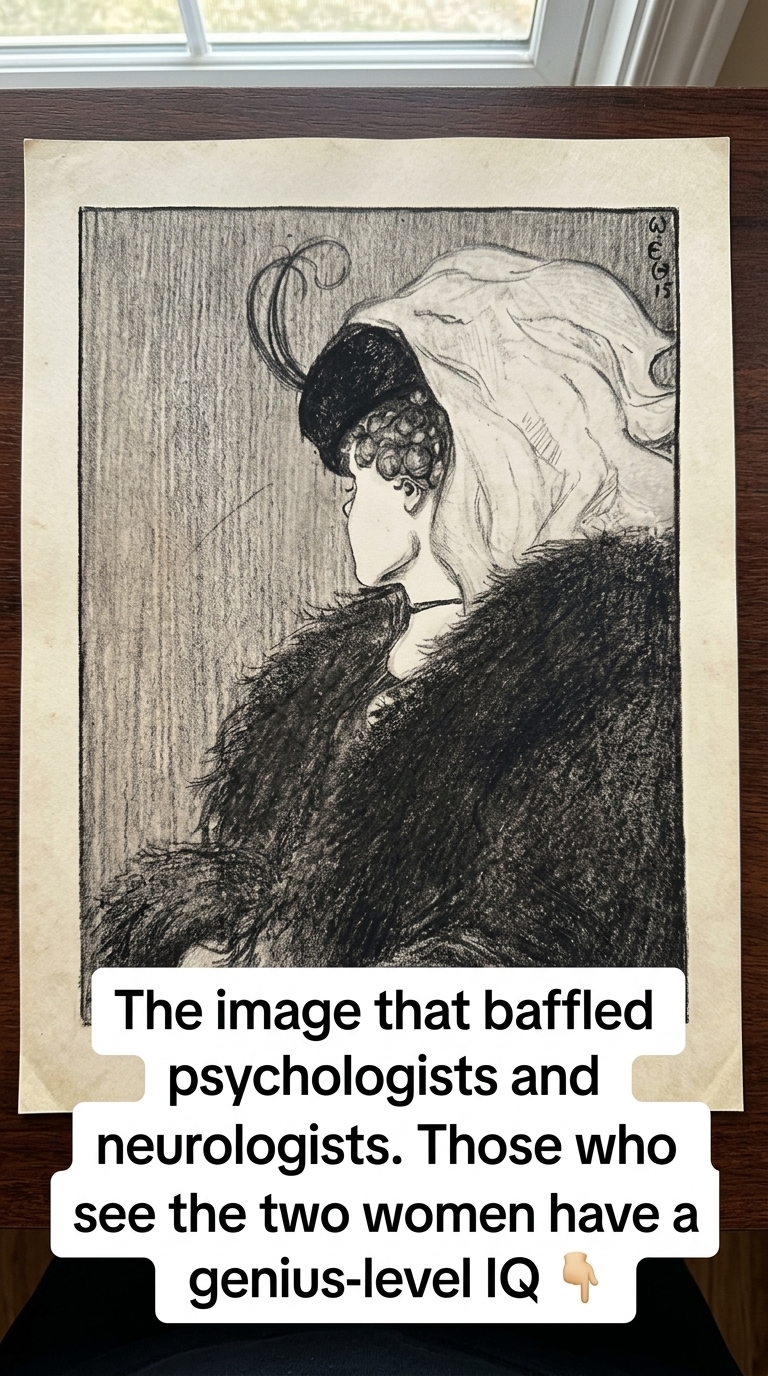
Optical illusions have intrigued people for decades, testing the fascinating ways our brains interpret visual information. Some pictures appear simple at first, only to reveal an entirely different image once you take a closer look.
Among the most celebrated examples is an illusion that has confused and captivated viewers for more than a century. Many people study it for several minutes before discovering that there is more than one image concealed within the artwork.
What makes this illusion so extraordinary is its ability to combine two completely distinct portraits into a single drawing. While some individuals notice both images almost instantly, others find it nearly impossible to uncover the second figure, no matter how long they look.
This iconic illustration has been astonishing viewers since the late 1800s. When it first appeared, the world looked very different. Telephones were still a relatively recent invention, and many of today’s technologies had not yet been imagined. The image originally appeared on a postcard created in Germany for a company called the Anchor Buggy Company. At the time, the postcards were distributed without any hint that the artwork contained a hidden surprise.
Most recipients simply looked at the picture and carried on.
Over time, however, people began to realize there was something remarkable about the drawing. What seemed to be a single portrait actually concealed a second face hidden in plain sight. The illusion was created by W. E. Hill, a gifted British cartoonist celebrated for his inventive and imaginative work. His creation would later become one of the most famous optical illusions ever produced.
The drawing eventually became known as “Young Woman and Old Woman,” and it continues to inspire curiosity and discussion more than 100 years later.
At first glance, many people notice a young woman facing away from the viewer. She appears graceful and youthful, with her head turned to one side.
But take another look.
Within the very same lines lies the profile of an elderly woman gazing downward. Her nose, mouth, and chin are cleverly blended into the younger woman’s features, creating a visual puzzle that challenges the brain.
The most fascinating aspect is that both images exist at the same time. Your eyes are seeing the exact same illustration, yet your brain can interpret it in two entirely different ways. If you are struggling to spot both figures, try concentrating on different areas of the image. The young woman’s ear can also be viewed as the old woman’s eye. In the same way, the young woman’s necklace forms the elderly woman’s mouth.
Once both faces become visible, it is incredibly difficult to stop seeing them.
Psychologists and vision experts have studied this illusion for years because it provides insight into how human perception functions. Rather than simply capturing information like a camera, the brain actively interprets visual input, sometimes allowing multiple valid interpretations of the same image.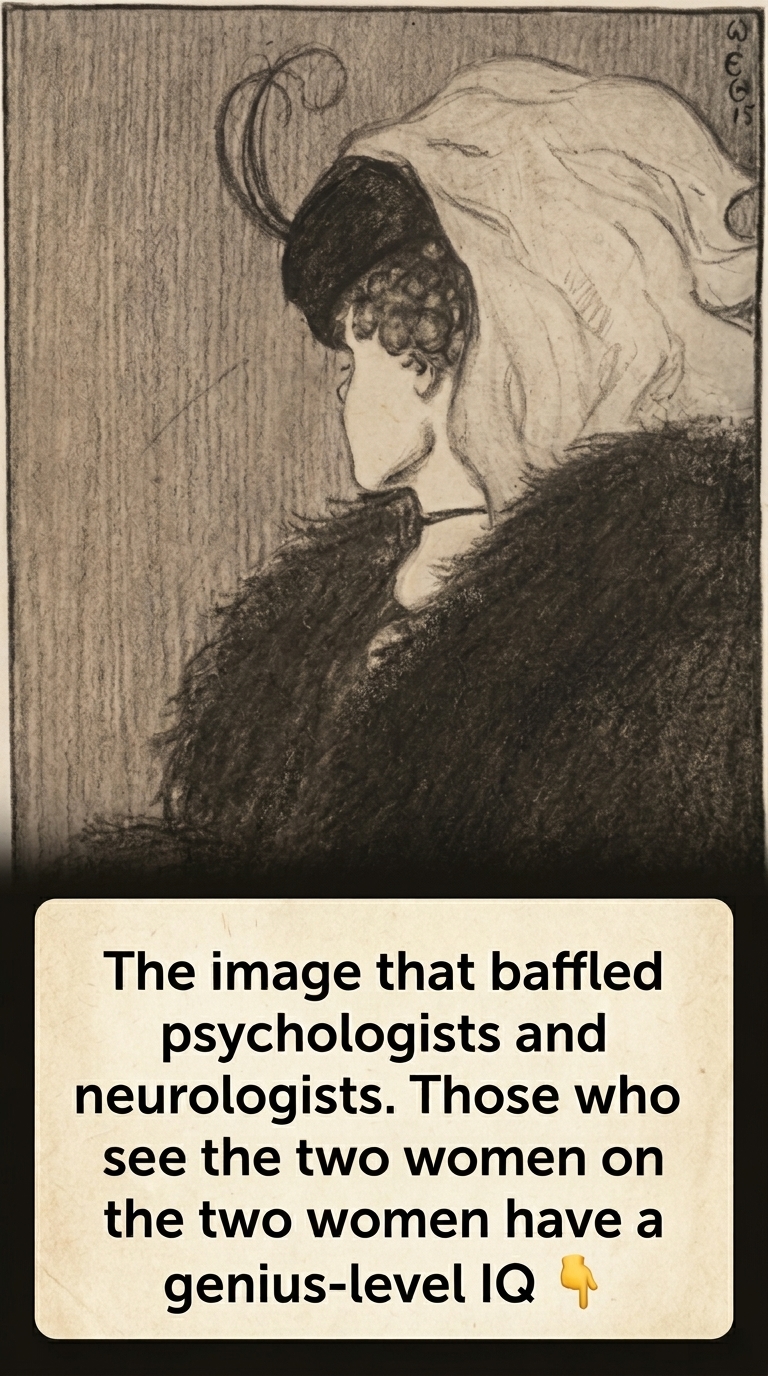
That is one reason this classic illusion has remained so popular despite the countless newer visual puzzles that have appeared over the years.
More than a century after its debut, people around the globe still challenge friends and family to identify both faces hidden within the drawing.
So take another look.
Can you spot both the young woman and the elderly woman?
If you can see both images, you are experiencing one of the most famous demonstrations of visual perception ever created—an optical illusion that has continued to amaze and challenge generations since the 1800s.
