

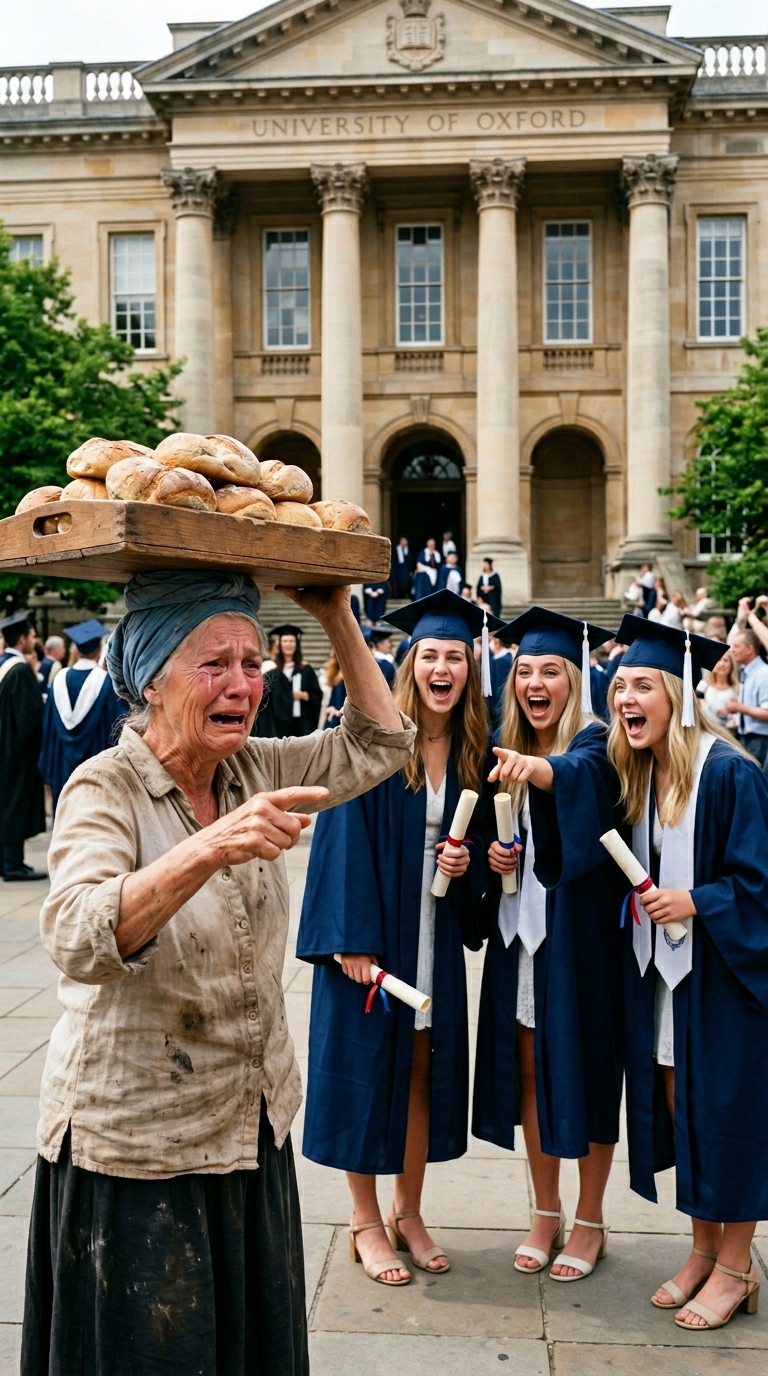
“Papa, I was accepted into the university.”
Grace Johnson held the letter with both hands, her fingers shaking as though the paper itself were alive. Her mother paused beside the stove. Her younger sister stopped chewing. Even the old ceiling fan seemed to slow.
Thomas Johnson stared at his daughter, then at the envelope stamped with the University of Lagos seal.
For a moment, Grace almost believed he would smile.
Instead, he said, “Who sent you there?”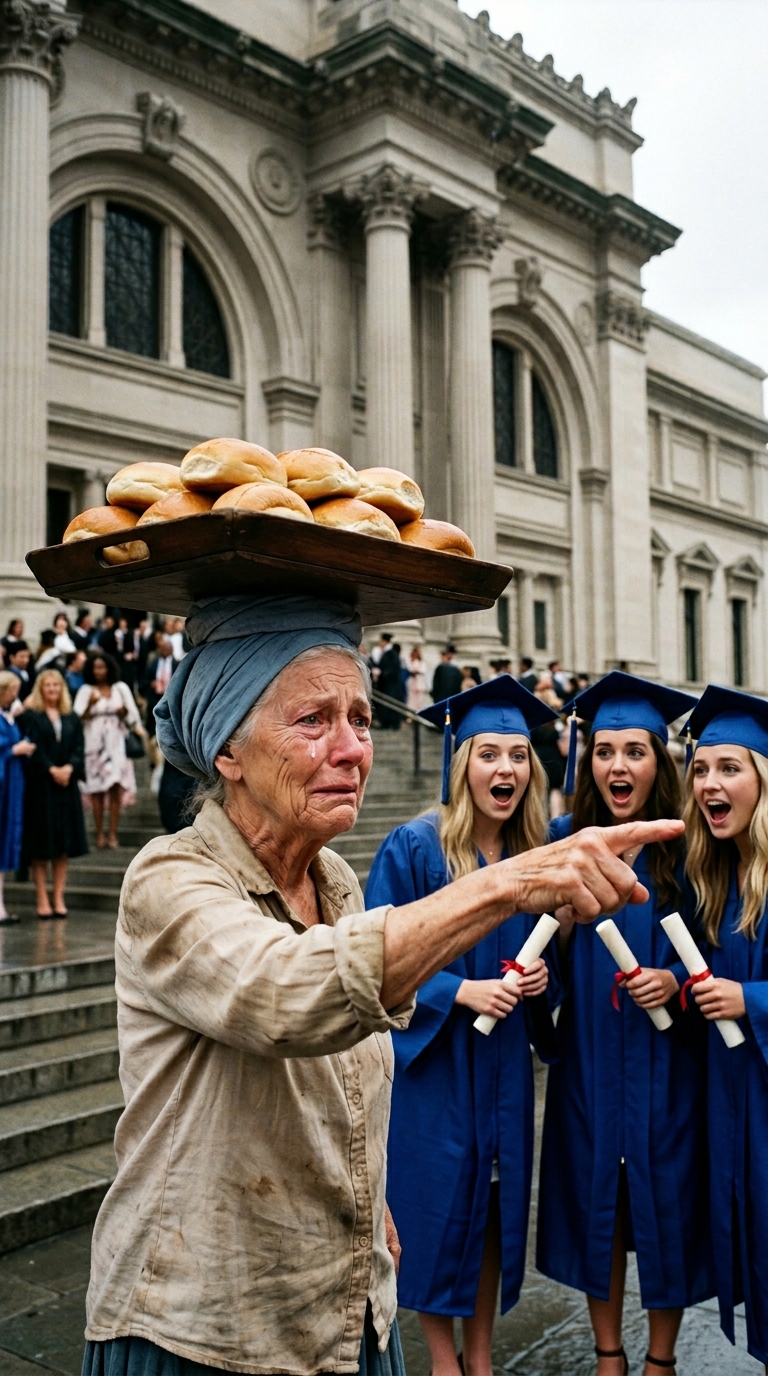
Grace blinked. “I applied by myself. I wanted to surprise you.”
His expression hardened.
“No daughter of mine is going to waste her time in lecture halls. A woman’s education ends in the kitchen. Do you hear me? In the kitchen.”
The words landed harder than any blow. Grace froze, her lifelong dream trembling inside her chest. She had pictured this moment countless times—tears, embraces, prayers, even pride. Never this, her father staring at her as though her achievement were an offence.
That night, after the house fell silent, Thomas entered Grace’s room and took the letter from her bedside table. He carried it outside to the back yard, where weeds pressed against a cracked wall. Under moonlight, he struck a match and watched the corner of the paper ignite.
The university seal curled, blackened, and vanished into smoke.
By morning, her future had turned to ash.
She searched everywhere—beneath her pillow, inside her bag, behind her wardrobe, between the pages of her Bible. Nothing. When she asked her mother, Elizabeth lowered her gaze. When she asked her father, he turned a page of his newspaper and said, “You were never accepted. Stop inventing stories.”
Grace stared at him, waiting for guilt, anger, anything human.
But Thomas Johnson remained calm.
That was the first time she understood that some people do not destroy dreams in anger. They do it quietly, deliberately, and sleep peacefully afterward.
Grace did not cry that morning. She returned to her room, took a clean sheet of paper, and wrote at the top: New university application.
Weeks later, she applied again. She queued for hours, begged for copies of certificates, filled forms with borrowed pens, and sat for the entrance exam a second time. When the results were released, her name appeared again.
This time, she did not celebrate.
She gave the letter to her friend Deborah for safekeeping. But her father found a way. He went to Deborah’s home and told her mother that Grace was unstable, dishonest, had stolen money, and that anyone assisting her would bear responsibility for whatever followed.
The letter was returned.
And burned.
The third time, Grace trusted no one inside her home. She used a former teacher’s address. When the acceptance arrived, she kept the letter pressed against her body for three days.
But Thomas sensed it. He watched her. Restricted her movements. Increased her chores. Ensured she was too exhausted to think, too monitored to plan, too trapped to breathe.
One night, Elizabeth entered her room and whispered the truth.
“He burned them,” she said. “All the letters.”
Grace looked at her mother—not in surprise, but because hearing it made the wound real.
“And you knew?”
Elizabeth’s eyes filled. “I was afraid.”
Grace said nothing. She understood fear. She had lived inside it. But understanding did not lessen the pain.
That night, she packed a small bag—clothes, toothbrush, notebooks—and prepared to leave.
Then she heard it.
A sharp sound from her parents’ room. A slap. A muffled cry.
Grace ran. Her mother stood against the wall, holding her cheek. Her father stood in the center of the room, breathing hard.
Something inside Grace went still.
She looked at him and said, voice colder and stronger than ever before, “I will stay. But I will not stop fighting for my life.”
The next morning, she found another way.
If she could not enter the university as a student, she would remain as close to it as possible.
With her small savings in an old biscuit tin, Grace bought water sachets, biscuits, and phone credit cards. She tied a clean cloth around a tray, balanced it on her head, and walked two kilometres to the gates of the University of Lagos.
On the first day, she sold almost nothing. Students passed without noticing her. Some brushed past her with their bags. Some laughed. Some looked through her as though she were part of the dust.
But between customers, Grace listened.
The law faculty windows faced the side street. When lecturers spoke loudly enough, their voices drifted outside.
Offer. Acceptance. Consideration. Intention.
Grace stood beneath those windows with her tray and swallowed the words like water.
She began collecting discarded notes from bins and benches—torn handouts, old notebooks, incomplete textbooks. To students, it was waste. To Grace, it was treasure.
At night, after cooking, washing, cleaning, and pretending she had no second life, she sat under a small lamp and copied legal principles into her notebook. She did not understand everything, but she understood enough to continue.
A contract needs an offer, acceptance, consideration, and intention.
The burden of proof lies with the party making the claim.
Negligence begins where duty is ignored.
She repeated them softly like prayers.
Years passed—rainy seasons, dry seasons, heat, dust. Seven years selling water outside the gate. Seven years learning through windows. Seven years standing close enough to hear the dream but never allowed to touch it.
Her friend Deborah graduated and slowly drifted away. It hurt, but Grace accepted it. Not all friendships survive different paths.
A student named Daniel noticed her. He bought water he did not need, biscuits he did not like, and sometimes left books and notes behind.
One afternoon he asked, “What do you dream of?”
Grace answered without hesitation. “To become a lawyer.”
Daniel studied her for a long moment. “I believe you.”
Three words.
In Grace’s life, they felt like a miracle.
When Daniel graduated, he brought her a box of law books and notes.
“I don’t need them anymore,” he said.
Grace held the box as though it contained a future.
“Don’t stop,” Daniel said.
“I won’t,” she replied.
And she didn’t.
But even the strongest hearts grow weary.
Some nights, Grace knelt beside her bed and whispered, “God, did You forget me?”
There was no answer. Only silence, exhaustion, and a dream that refused to die.
Then one ordinary morning, everything shifted.
A group of law students argued near the gate over a mock case. Grace was arranging water sachets when she heard one confidently misstate a contract law principle.
She tried to stay silent.
She couldn’t.
“That’s not the issue,” she said.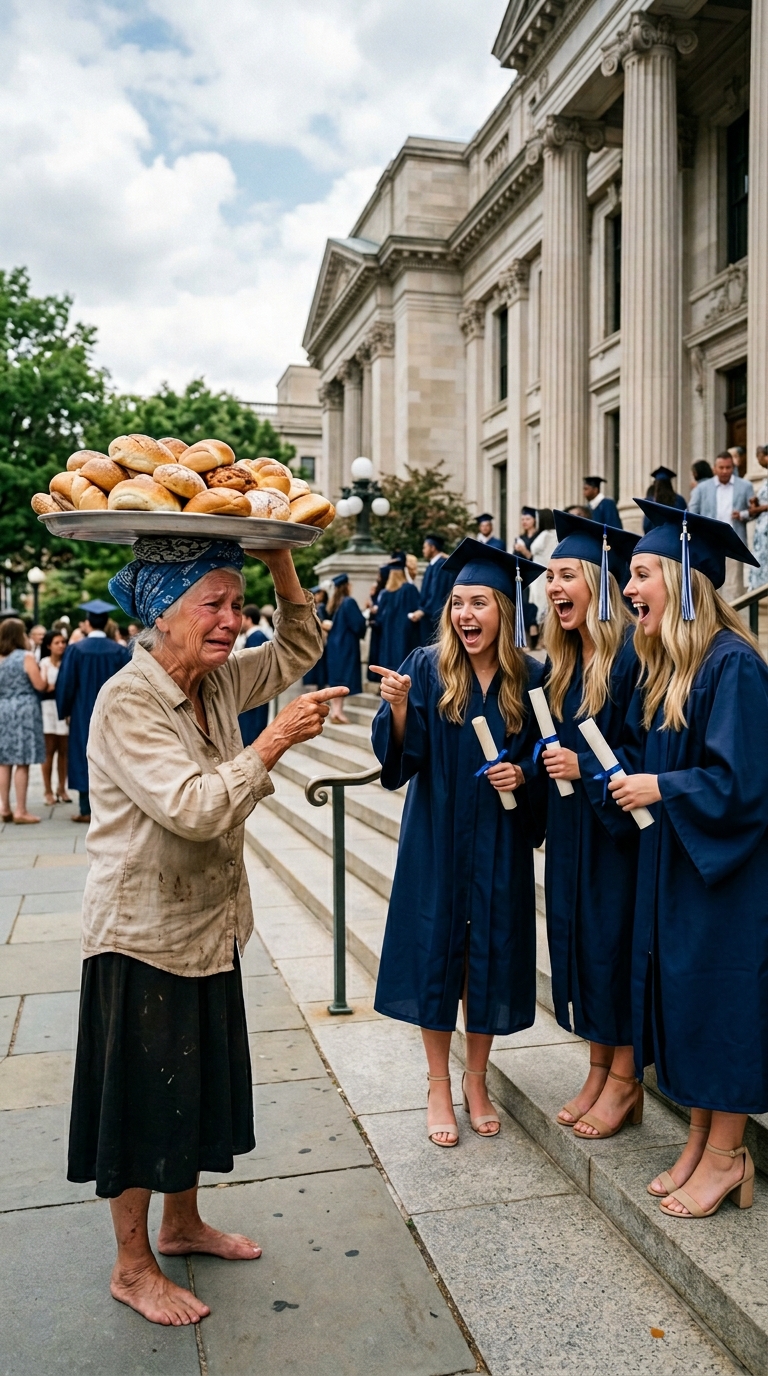
The students turned, surprised that the water seller had spoken.
Grace continued calmly. “You are confusing formation of contract with breach of contract. Your case is not about whether an agreement exists. It is about what happens after it is already formed.”
One frowned. “And how do you know that?”
She did not respond to the insult. She explained the rule, the distinction, and the argument so clearly that the three students fell silent.
Then a voice behind them said, “She’s right.”
A man stood watching her closely. His name was Samuel Clark. Grace did not know it yet, but he was a respected lawyer and philanthropist returning for a lecture.
Over the following days, Samuel returned. He asked her legal questions—difficult ones. Grace answered what she knew and admitted what she didn’t. Even then, her reasoning remained sharp.
On the fourth day, Samuel asked, “Why are you not inside a classroom?”
Grace set down her tray and looked toward the gate.
“Because I was not allowed in.”
Samuel did not press for details. He simply nodded.
Then he said, “I want to pay for your education.”
Grace stared at him.
“Not here,” he added. “Abroad. Somewhere no one can stop you.”
The street noise continued—buses, horns, shouting vendors—but everything felt distant.
“Why would you do that for me?” she asked.
Samuel looked at her. “Because you are too good for this sidewalk.”
That night, Grace told her mother.
Elizabeth did not hesitate.
“You must go,” she said. “Before your father finds another way to stop you.”
The preparations were quiet and fast. Samuel handled documents and visas. Elizabeth gave Grace a small envelope of savings she had gathered secretly for years, one note at a time.
The night before she left, mother and daughter sat in the yard after everyone had fallen asleep.
“Promise me something,” Elizabeth whispered.
“What, Mama?” “Do not come back the same.”
Grace held her mother’s hand. “I promise.”
At dawn, she left while her father still slept.
For the first time in her life, Grace walked toward a gate knowing she would pass through it.
Life abroad was not easy. The air was colder. The accents harder to follow. Professors spoke too quickly. Students watched her when she asked questions—sometimes with curiosity, sometimes with judgment.
But Grace had spent seven years learning through windows. She was never ashamed to ask someone to repeat a sentence.
Shame fades. Ignorance stays.
She worked evenings in a small restaurant near campus, carrying plates until her back ached, studying after midnight, waking early, and repeating the cycle. When exhaustion pressed on her chest, she whispered, “No excuses.”
In her second year, Professor David Smith noticed her essays.
“You think differently,” he told her.
He became her mentor—challenging her, correcting her, refining her arguments.
“To defeat the other side,” he once said, “you must first understand why it exists.”
Grace absorbed everything. She had no room for waste and no interest in average. The girl who once stood outside windows now sat in the front row. The girl who once picked scraps of notes from trash now wrote arguments discussed after class.
On graduation day, her hands trembled beneath her robe.
When her name was called—Grace Ade Johnson, top of her class—she walked slowly across the stage, holding back tears.
In her mind, she heard her mother’s words: Children born in the rain have difficult roads, but they always reach their destination.
Years later, Grace returned to Lagos.
She did not come back with a tray on her head. She came back with a law degree, a black suit, and a name people now spoke with respect.
The first thing she did was move her mother into a secure apartment with strong locks, steady electricity, and a kitchen filled with peace. Elizabeth moved through the rooms, touching the walls as though they might disappear.
“Is this really ours?” she asked.
Grace smiled. “Yes, Mama. It’s ours.”
Then Grace returned to the university gate.
The same road. The same dust. The same iron bars. The same sunlight falling across the pavement where she had spent seven years of her life.
Dr. Michael Adams, one of the professors who once saw her with a torn textbook under her arm, spotted her standing there.
“Counselor Johnson,” he said.
The title landed deeply.
Grace smiled. “I came back because someone saw me.”
He shook his head. “No. You came back because you never stopped.”
After that, Grace returned often—not to sell water, but to look for girls like the one she used to be.
She found them quickly. Girls with trays on their heads and hunger in their eyes. Girls who watched classroom windows with quiet longing, knowing they belonged inside but had been told otherwise.
One morning, she approached a thin girl selling sachet water.
“What is your name?”
“Amara,” the girl said cautiously.
“Do you want to go to school, Amara?”
The girl looked down. “I would have liked to.”
Grace handed her a card.
“Bring me your results tomorrow. I’ll take care of the rest.”
Amara’s hands trembled. “Why would you do that?”
Grace looked at the university gate, then back at her.
“Because someone did it for me.”
The following week, three girls came. The week after, seven more. Soon, people began talking about the lawyer who stood at the university gate giving scholarships to girls once left outside.
The gate that once rejected Grace became, through her, a door for others.
One afternoon, while she was speaking with two candidates, a voice came from behind her.
“Grace.”
She turned.
Thomas Johnson stood a few steps away.
He looked smaller than she remembered. Older. His shirt hung loosely. His shoes were worn down. His hands hung uncertainly at his sides.
For a long moment, neither spoke.
Then Thomas Johnson—the man who burned her letters, who said a woman’s education ends in the kitchen—slowly dropped to his knees on the same pavement where she once sold water.
People stopped walking.
“I am sorry,” he said, voice breaking. “I was wrong. I did not understand. Please forgive me.”
Grace looked at him.
She saw the years he had taken. The letters turned to ash. The hunger, the exhaustion, the girl she had been under those windows.
“You did not only deny me an education,” she said quietly. “You denied me time. And time is something I can never get back.”
Thomas bowed his head.
Grace breathed in.
“I forgive you,” she said.
He looked up, hope flickering.
“But things cannot go back to the way they were,” she continued. “They will never be the same.”
He nodded slowly.
Grace stepped aside and returned to the girls waiting for her.
She did not watch him leave.
That evening, after the vendors were gone and the gate had closed, Grace sat alone on a bench by the road. The air carried dust, traffic, and the scent of distant rain.
She thought of her mother. Of Daniel and his box of books. Of Samuel Clark telling her she was too good for the sidewalk. Of Professor Smith sharpening her mind until fear had nowhere to hide.
She thought of the girl she once was—the one standing outside a gate she had every right to enter.
Grace stood, adjusted her jacket, and picked up her bag.
She no longer stood outside the gate.
From now on, she was the one opening it.
