

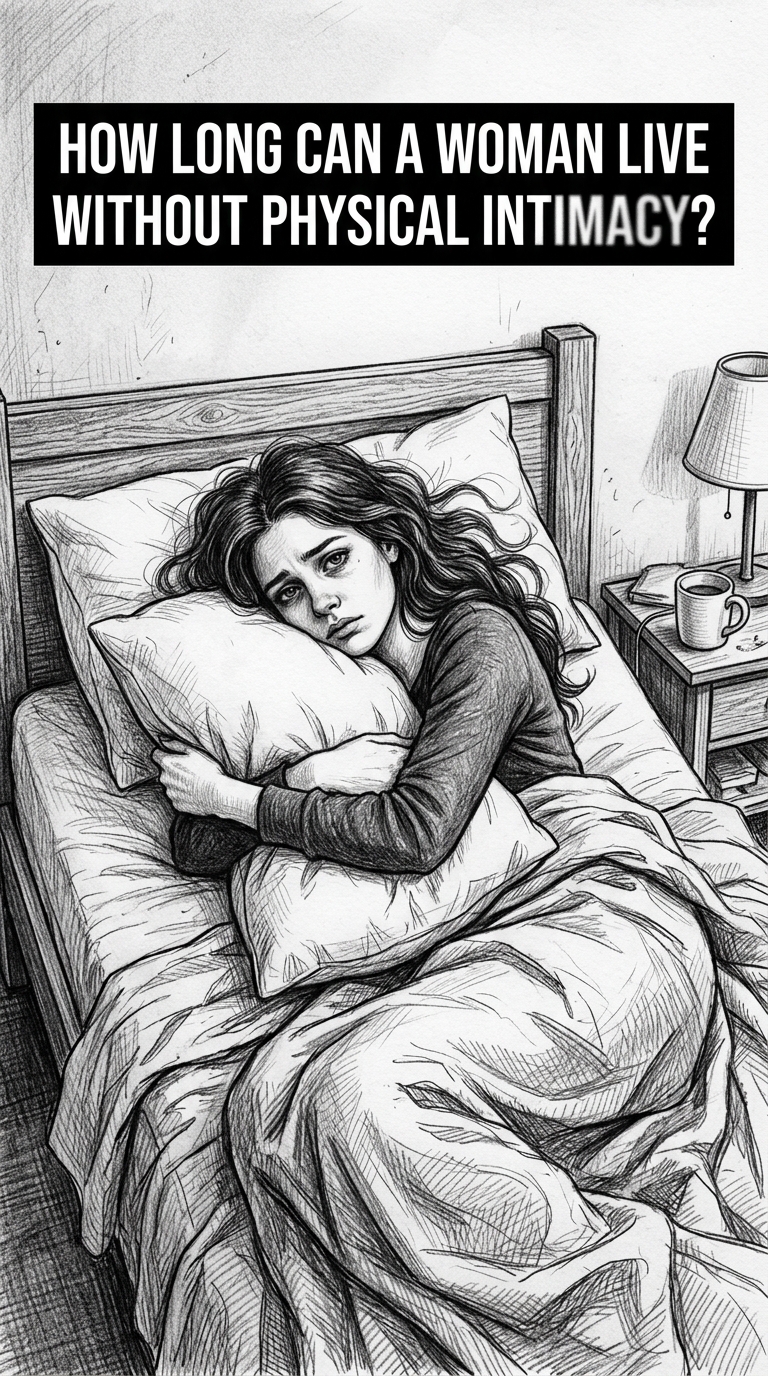
Physical intimacy is often seen as nothing more than an extension of romance or sexuality—an added benefit, an optional element of love. But it rarely feels optional when it is missing.
For many women, physical intimacy is far more than passion; it represents emotional safety and stability within a relationship.
Research in couples counseling and neuroscience suggests that touch is one of the primary ways humans establish a sense of security.
When life feels overwhelming, a simple touch, a hand held, or a gentle pat on the back can serve as reassurance that love is still present—and somehow, it makes everything feel more manageable.
However, when these moments gradually disappear, the emotional consequences become impossible to ignore.
One of the most significant effects of reduced physical intimacy is the feeling of rejection. Not direct rejection, but subtle, indirect forms of it—which often hurt even more deeply.
A request for affection is met with avoidance, a tired sigh, or another postponed moment.
Over time, this pattern creates internal questioning: “Am I no longer attractive?” “Has something changed?” “Are they losing interest in me?”
Even when the cause has nothing to do with attraction, silence creates its own narrative. Human beings search for meaning, and in moments of emotional vulnerability, we rarely choose the gentlest explanation for ourselves.
This is where self-doubt begins to grow. It does not usually happen suddenly, but slowly and quietly.
A woman may begin to scrutinize herself more often, comparing current photos with older ones, wondering if she has lost her appeal, her energy, or her sense of being loved.
Small changes she once ignored—a little weight gain, fine lines, fatigue—begin to feel amplified.
Physical intimacy should not define a person’s worth, but in romantic relationships, affection often becomes part of how love is emotionally understood.
When touch disappears without explanation or reassurance, many women begin to feel less chosen, and that shift changes something internally.
Loneliness begins to appear in unexpected ways—not the loneliness of being alone, but the deeper loneliness of lying beside someone and still feeling emotionally isolated.
On the surface, the relationship continues normally. Bills are paid, meals are shared, conversations about work, chores, and daily responsibilities go on. Yet underneath, there is emptiness.
Without physical intimacy, couples can gradually shift into what professionals call transactional living.
Relationship experts such as Dr. John Gottman describe this as a “roommate phase,” where responsibility remains but emotional connection fades.
Warmth disappears first, followed by vulnerability, and eventually openness. Over time, even affection can feel uncomfortable because the emotional distance has grown too wide.
Once this distance becomes routine, reconnection becomes increasingly difficult. Another overlooked effect is persistent overthinking.
Without reassurance or closeness, doubt fills the space. A woman may begin analyzing every detail—short replies, lack of eye contact, subtle changes in behavior—like a mind constantly searching for danger.
Fears are often irrational, but sometimes they are partially grounded. Without reassurance or communication, however, fear can overshadow reality entirely.
The mind cycles through unanswered questions: “Is there someone else?” “Are they unhappy?” “Is this relationship ending?” “Did I miss the signs?”
This insecurity spreads into daily life. Sleep becomes harder, focus weakens, mood shifts, and even outside experiences feel heavier because emotional tension follows everywhere.
Eventually, sadness takes shape.
When emotional pain turns into resentment—especially when feelings continue to be ignored—a woman may begin to withdraw as a form of self-protection.
At first, she tries harder. Then she tries less. Eventually, she stops trying altogether.
This is dangerous because emotional withdrawal does not feel significant in the moment. It feels practical—safer to avoid disappointment than to keep risking emotional pain.
Many relationships do not end through arguments, but through quiet exhaustion, where everything is “fine” on the surface but nothing is emotionally alive underneath.
However, a lack of physical intimacy does not automatically mean love is gone.
Life is more complex than simplified advice suggests. Stress, illness, insecurity, depression, exhaustion, grief, hormonal changes, unresolved conflict, busy schedules, and emotional burnout all affect intimacy.
Studies in the Journal of Sex & Marital Therapy consistently show that these factors are major contributors to reduced physical closeness, meaning it is not necessarily about the partner’s value or desirability.
Sometimes distance comes from emotional fatigue. Other times, people do not even realize how disconnected they have become.
This is why communication matters. Not threats, not shame, and not pressure—but calm honesty. Phrases like “I miss you,” “I miss being close to you,” or “I’ve been feeling lonely lately” create space for understanding instead of conflict.
Behind many intimacy struggles lies a deeper emotional need: reassurance, attention, connection, and validation. Healing often begins with small steps—sitting closer on the sofa, holding hands again, longer hugs, or maintaining eye contact during conversation.
Some couples resolve it through honest dialogue. Others require professional support to address resentment, communication breakdowns, or emotional distance built over time. Relationships are complex because people are complex.
Love shifts under pressure, and so do individuals.
Yet in many women’s lives, there remains a strong connection between touch and emotion, whether openly acknowledged or not.
Touch can express what words often cannot—comfort, passion, security, affection, love. Without it, relationships can feel emotionally cold even without conflict.
This issue matters not because intimacy is everything, but because emotional connection is built through everyday gestures couples often take for granted until they are gone.
A hand held. A kiss at the door. A body moving closer instead of away.
Simple things. Never simple.
