

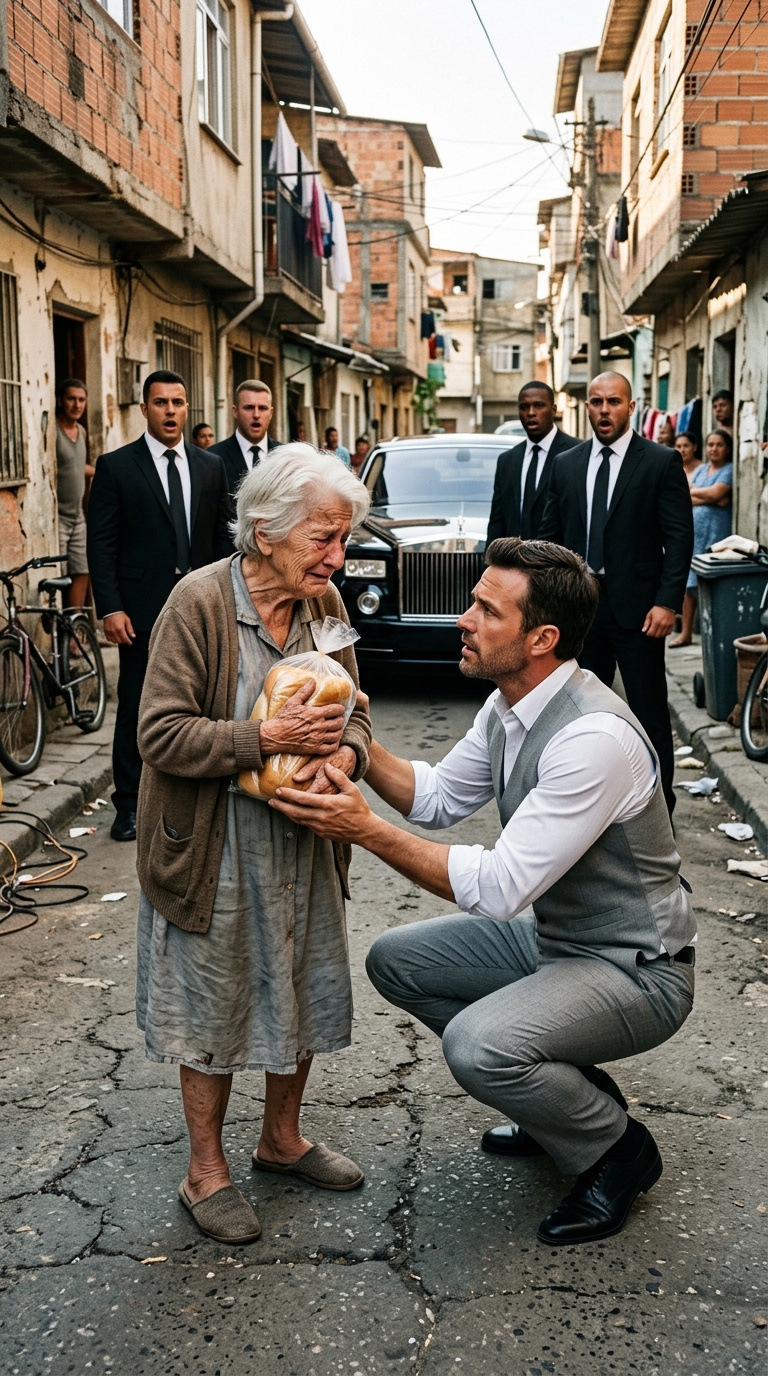
The old woman’s name was Margaret Lewis. She lived in a cramped, worn room at the back of an aging tenement in East Los Angeles.
There was barely enough space for a squeaky metal bed, a small wooden table with a crooked leg, and a portable stove that permanently smelled of gas and burnt coffee.
She had lived alone for more than ten years, ever since her husband died from a stroke and her only son left after a bitter argument… never to return.
Margaret’s life could be summed up in one word: endure.
Every morning before sunrise, she packed her basket and walked to the local market, selling bread rolls and coffee. Some days she sold everything quickly; other days she came home late with half of it untouched. What she earned barely covered rent, her blood pressure medication, and enough rice and beans to get by.
Everyone in the neighborhood knew Margaret. She was thin, bent with age, soft-spoken, with kind eyes that never seemed to judge.
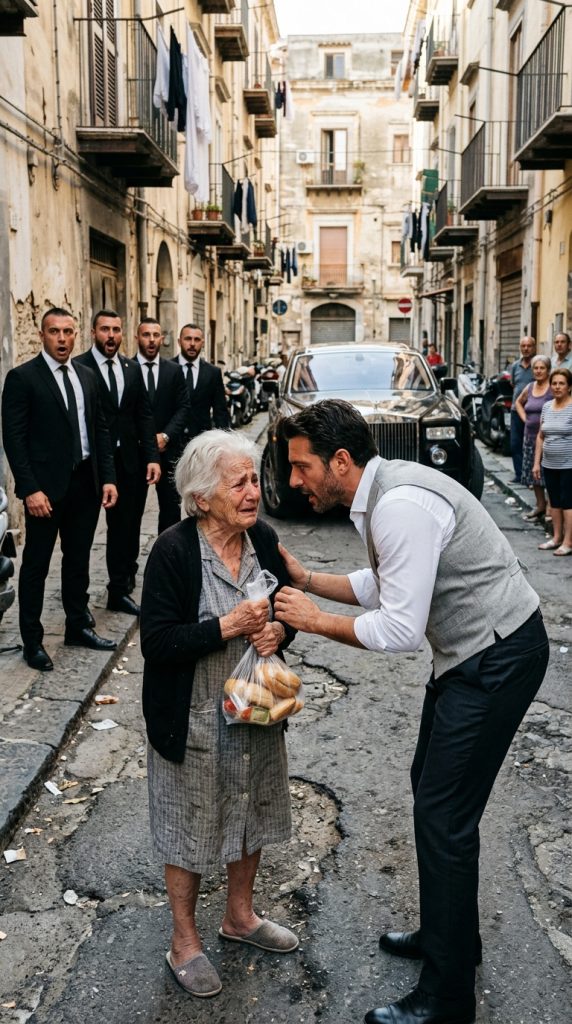
She had almost nothing, yet she always shared—sometimes food, sometimes coins, sometimes only a few gentle words. She never turned anyone away.
One gray afternoon, rain falling steadily, as she packed her basket to go home, she noticed a man lying beneath the awning of a closed store.
He was curled into himself, soaked through, wearing a torn coat. His face was pale, his lips bluish from the cold. Beside him sat a battered cloth bag, barely holding together.
People passed without stopping. Some glanced briefly, others looked away entirely.
Margaret stood still.
After a moment, she stepped closer.
“Sir… are you all right?” she asked quietly.
The man opened his eyes with effort.
“Don’t worry. I’m fine,” he said, forcing a weak smile.
Margaret didn’t question him. She took a warm bread roll from her basket, wrapped it carefully, and handed it to him.
“Eat. Cold is worse when your stomach’s empty.”
He stared at the bread as if it were sacred.
“For me?”
She nodded.
“Yes. I still have more.”
It wasn’t true. It was the last one.
Without thinking, she removed her thin raincoat and placed it over his shoulders.
“You can’t stay here tonight. My room is small, but it has a roof.”
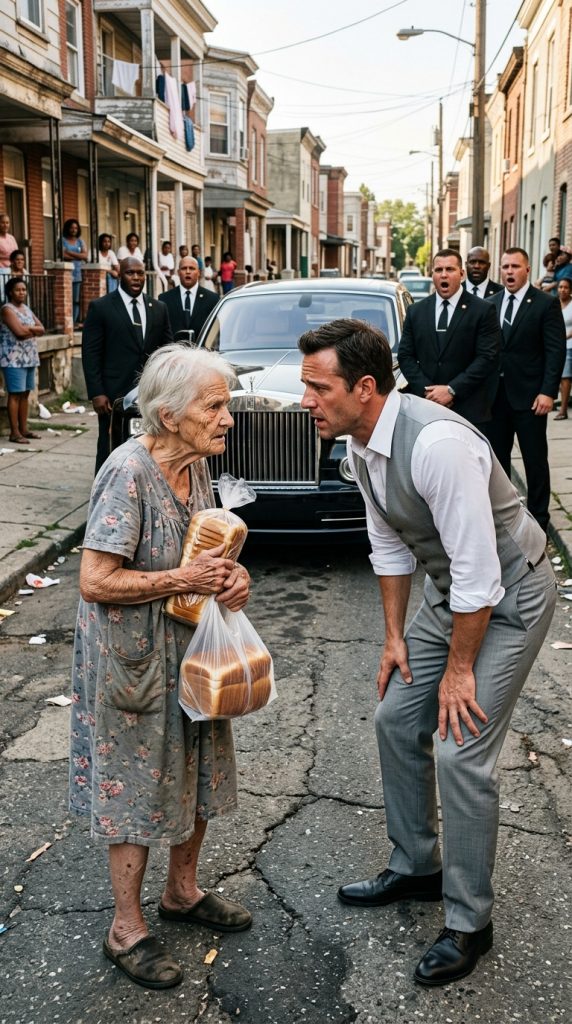
The man looked at her for a long moment, disbelief in his eyes. Finally, he nodded.
That night, Margaret’s tiny room had a guest. She prepared a thin pot of oatmeal with cinnamon. He ate slowly, carefully, in a way that didn’t match his appearance.
He said his name was Henry Collins. He told her he had lost everything—his businesses, his family, his purpose—and had been living on the streets for months. It was a familiar story.
Margaret didn’t interrogate him. She listened. Then she spoke of her husband, her estranged son, and the long nights listening to rain on the tin roof.
Henry slept on a mat on the floor. Before the light went out, he murmured,
“It’s been a long time… since anyone treated me like a human being.”
Margaret turned away so he wouldn’t see her cry.
In the days that followed, Henry stayed. He carried her basket, cleaned the room, fixed the door that never closed right. He spoke little, but everything he did was careful, deliberate. Sometimes he stood on the corner watching traffic, distant, as if remembering another life.
One morning, Margaret collapsed at the market. Henry lifted her without hesitation and rushed her to the nearest public hospital. He paid for the tests, the medicine—everything.
When she woke, she saw him outside holding the paperwork.
“Where did you get the money?” she asked, alarmed.
He smiled.
“I had a little left.”
She didn’t know that moments earlier he had made a brief call.
“Prepare everything. I’ll return in three days.”
Three days later, Henry was gone.
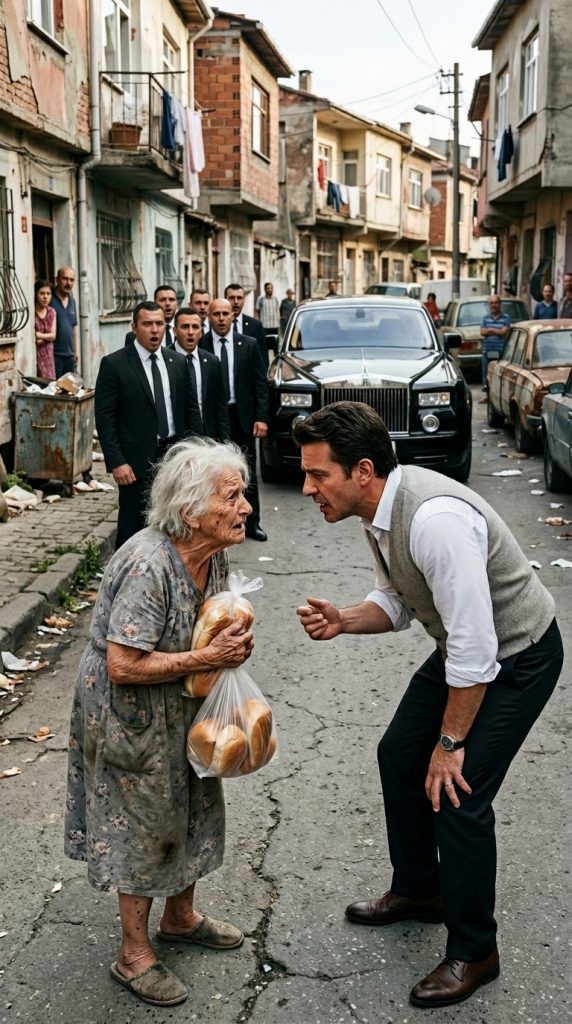
No goodbye. Only his old coat and a note:
“Thank you for helping me when I had nothing.”
Margaret held the paper for a long time, her chest tight with worry—afraid he’d return to the streets, afraid no one would help him when winter came.
A week later, the tenement erupted in confusion.
Luxury cars blocked the alley. Men in suits asked for Margaret Lewis. They knocked on her door.
When she stepped out, trembling, an elegant man bowed slightly.
“We’ve been looking for you all over the city.”
He stepped aside.
Henry appeared.
Clean-shaven. Impeccably dressed. Commanding silence.
“Margaret… forgive me for hiding the truth.”
She was speechless.
One of the men spoke.
“He’s the CEO of the Collins Financial Group. He lived as a homeless man to rediscover himself.”
Margaret nearly fainted.
Henry knelt before her.
“When I was nothing, you gave me everything. Not because of who I was—but because of who you are.”
He handed her documents.
“I want you to live comfortably. You don’t have to sell bread anymore.”
Margaret shook her head, crying.
“I didn’t help you for this.”
“I know,” he said, holding her hands. “That’s why you deserve it.”
Later, Margaret lived in a small, sunny house with a garden. But she still woke early every morning, baked bread, and shared it with those who had nothing.
And Henry—every time he passed that old market—lowered his head.
Because he knew a single act of kindness had saved his life.
