

A Lesson About Compassion
It was a crowded afternoon at the neighborhood supermarket.
Sarah, a young cashier who had worked there for several years, handled her register with the same impatient attitude she showed every day.
She took pride in being fast and efficient, but beneath that confidence, she often judged customers by the way they looked.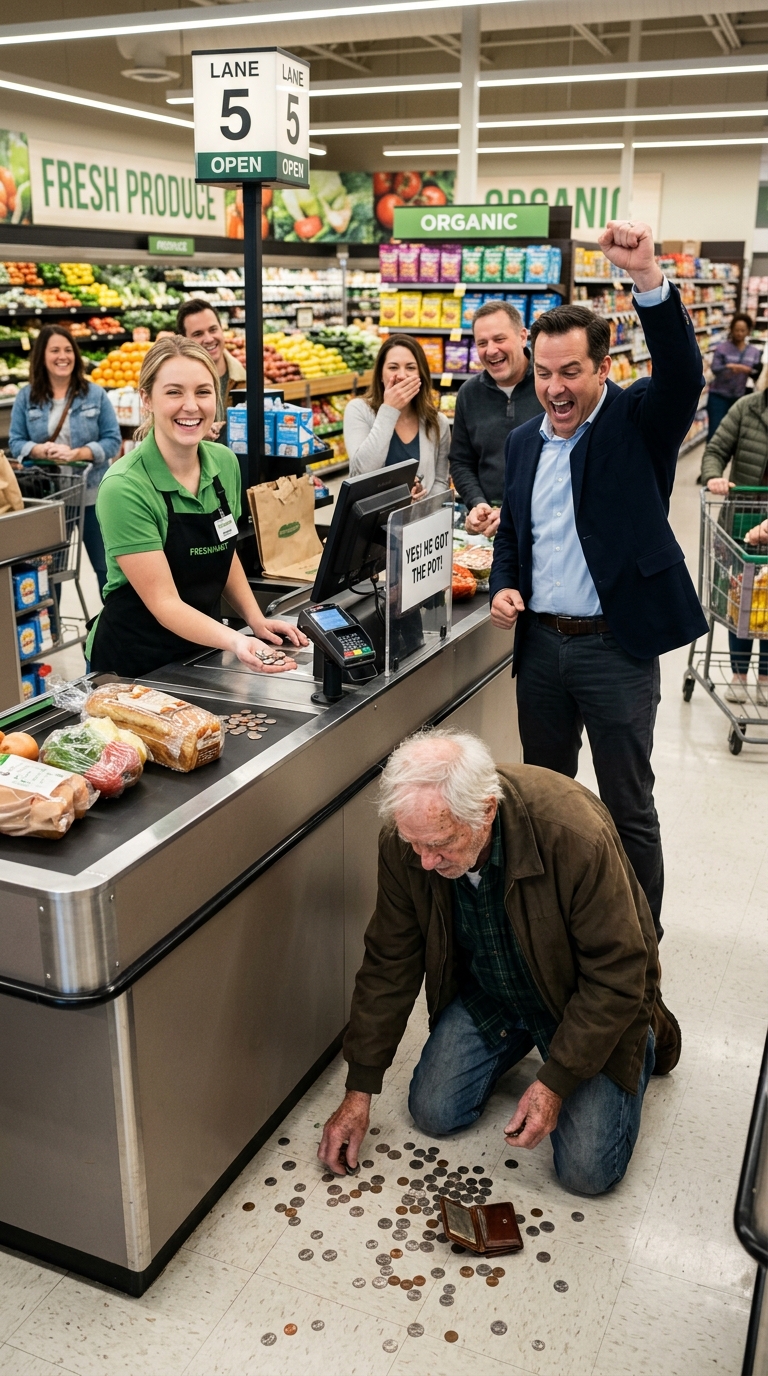
An older man slowly approached her checkout lane. His clothing was worn and dirty—faded orange pants ripped at the knees, a stained hoodie, and battered boots that looked years old.
He appeared as though he hadn’t eaten properly or showered in days. In his hands, he carried only a loaf of bread and a bottle of water.
Carefully, he placed them on the conveyor belt before reaching into his pocket for loose coins: a small pile that barely covered the total.
Sarah scanned the items and announced the amount with an annoyed sigh. “$4.87,” she said sharply, looking at him with obvious contempt.
The man quietly nodded and began setting the coins on the counter one at a time—pennies, nickels, and dimes—until the exact total was there.
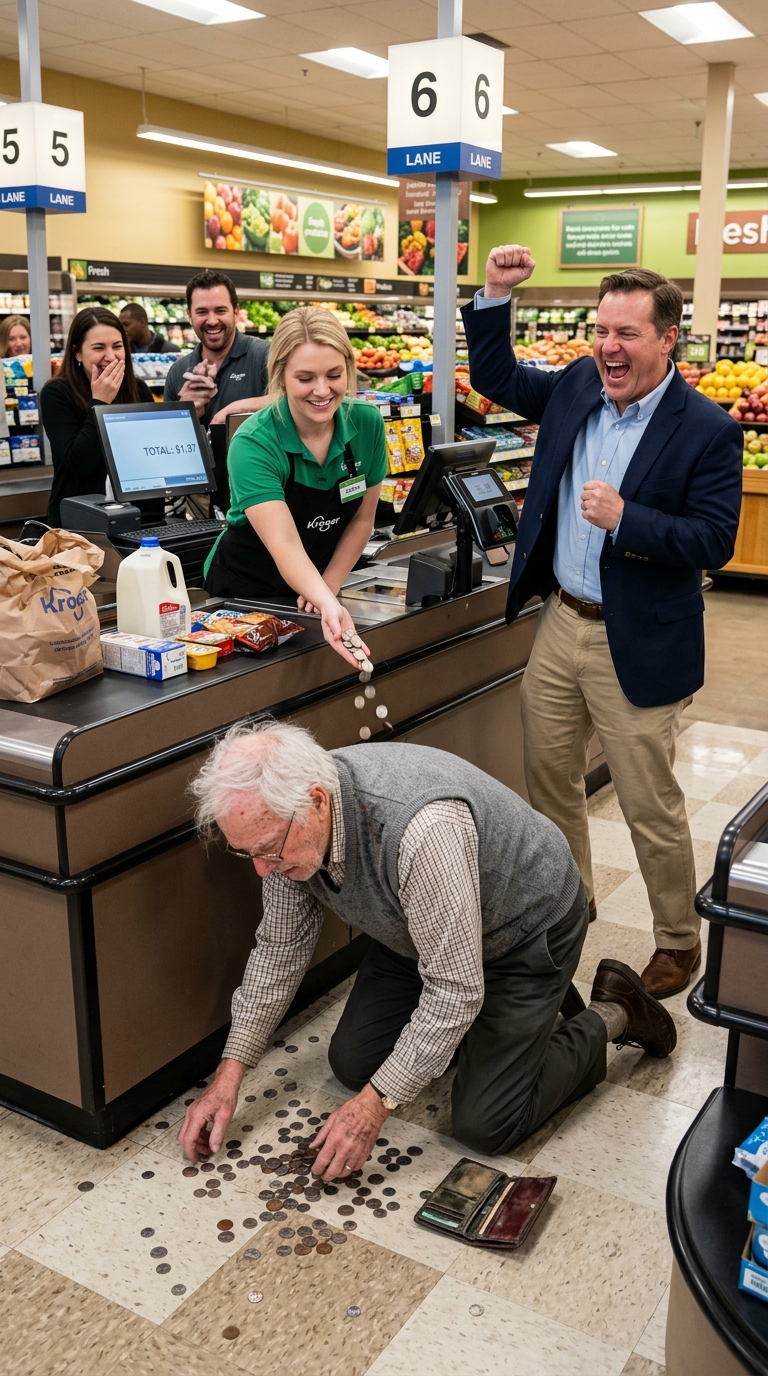
Sarah grimaced in disgust. “Really? You’re paying with all this junk change?” she muttered loudly enough for nearby shoppers to hear. Without warning, she swept the coins off the counter with one motion, sending them clattering across the floor.
“Pick them up if you want your stuff,” she sneered, folding her arms. “I’m not touching that filthy money.”
The old man looked stunned and ashamed. Slowly, with aching knees, he bent down to collect the scattered coins from the dirty floor while customers nearby watched in uncomfortable silence.
What Sarah didn’t realize was that a sharply dressed man in a suit had been observing the entire incident from a few aisles away.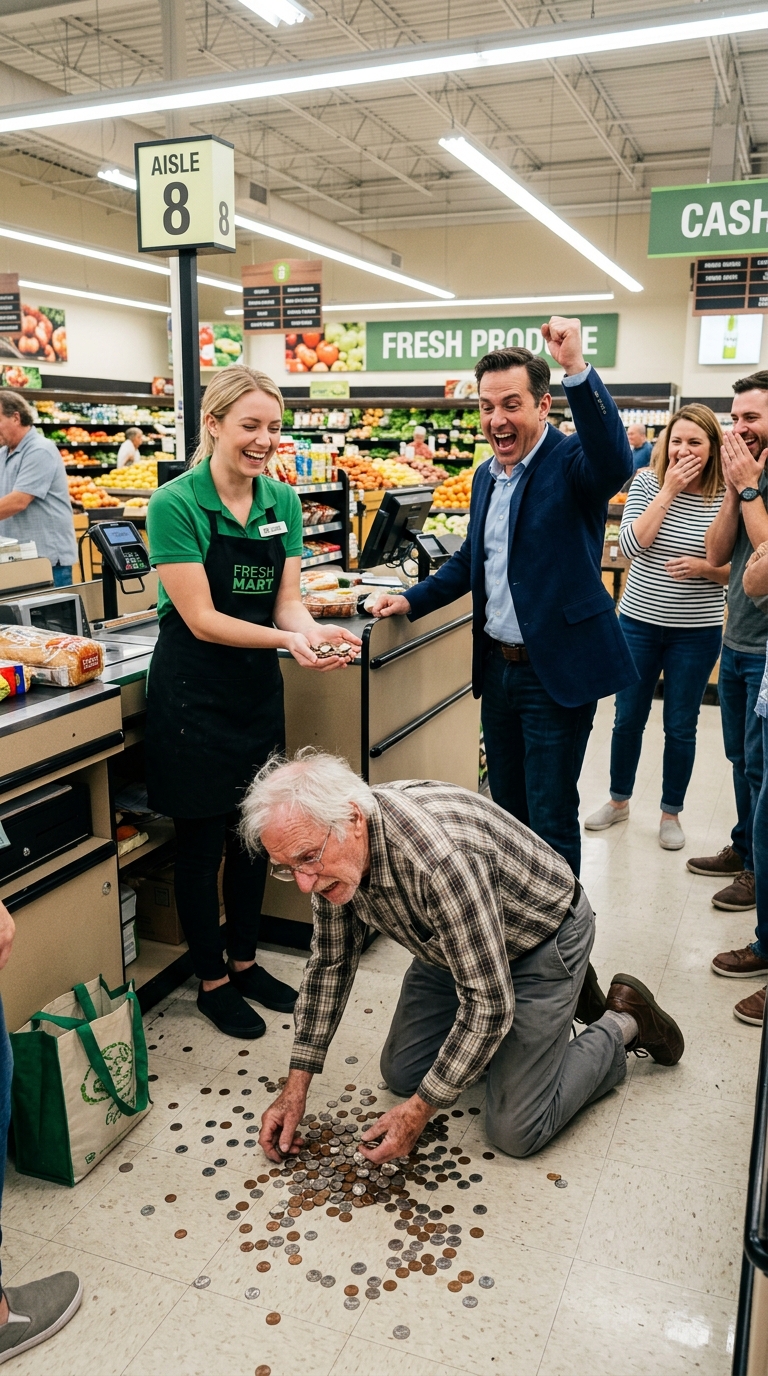
It was Mr. Thompson, the CEO of the supermarket chain, making an unexpected visit to inspect store operations personally.
His expression darkened as he witnessed the cruelty unfold. He walked directly toward the checkout lane just as the elderly man finished gathering the last of the coins and stood up, humiliated. “Excuse me,” Mr. Thompson said firmly, turning to Sarah. “Is this how customers are treated here?”
Sarah froze the instant she recognized him from company photos. Her confident attitude vanished immediately. “Sir, I… he was slowing down the line, and the change was—”
“Enough,” Mr. Thompson interrupted, his tone calm yet commanding. “That behavior is completely unacceptable. You just humiliated a man who is already struggling. Kindness costs nothing, but clearly, you haven’t learned that.”
He then looked toward the store manager, who had rushed over after noticing the scene. “This employee is terminated effective immediately. Escort her out.”
Sarah’s eyes widened in shock. “But sir, it was just—”
“No excuses,” he replied. “Collect your belongings and leave.”
As security escorted a stunned Sarah away, Mr. Thompson turned back to the elderly man.
“Sir, I sincerely apologize for what happened. Your groceries are free today—and please, take this.” He removed a $100 bill from his wallet and handed it to him.
The old man looked up with tears in his eyes. “Thank you, sir. God bless you.”
Mr. Thompson nodded gently. “No, thank you for reminding us what truly matters.”

After that day, the supermarket introduced new employee training focused on compassion and treating every customer with dignity. And Sarah? She learned the painful lesson that judgment can come back far faster than coins hitting the floor.
Kindness will always speak louder than cruelty.
