

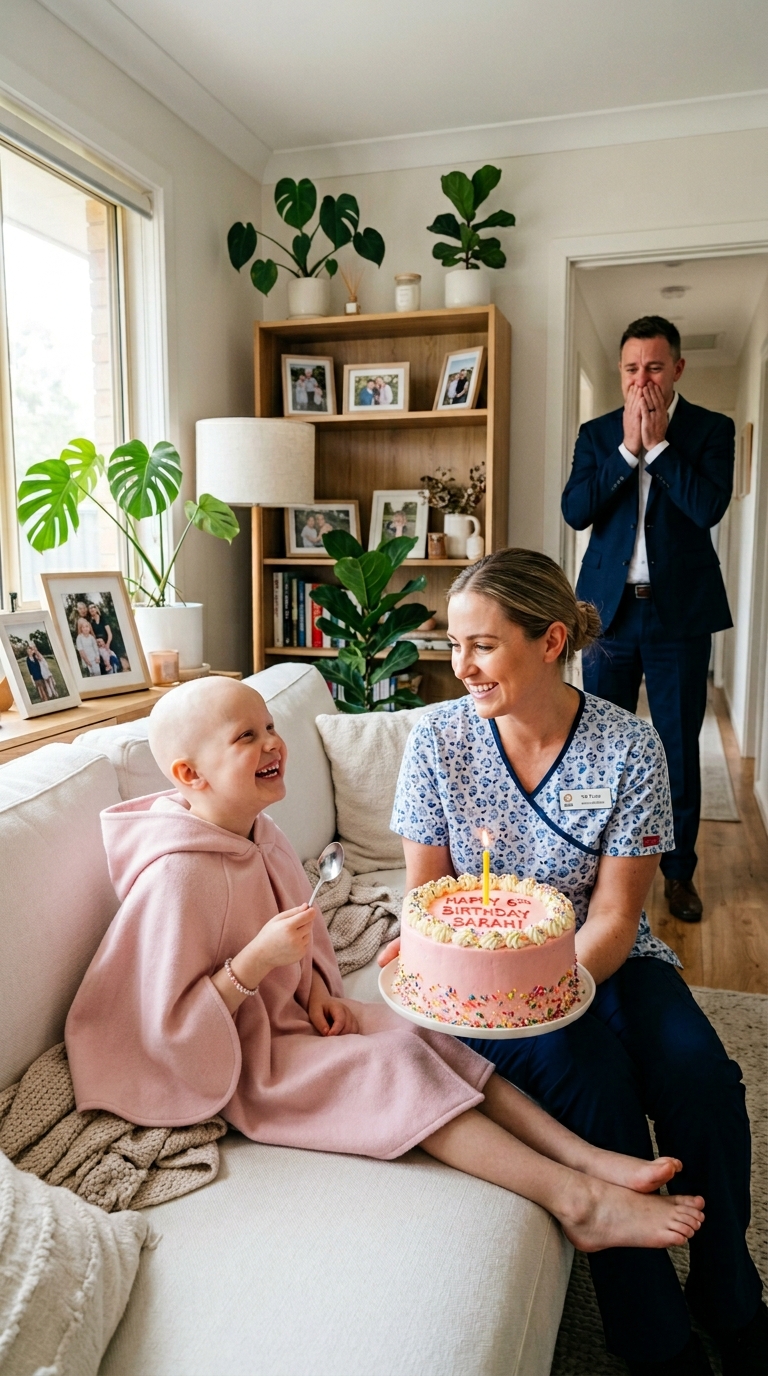
Jonathan Hale Had Everything—Except the One Thing He Would Have Given Away His Entire Fortune For
Jonathan Hale was a man who had conquered the world.
His influence reached across continents. His companies ruled technology, private equity, and luxury real estate. Markets shifted when he acted. Rivals studied him the way people studied natural disasters. His glass mansion overlooking the Pacific cliffs stood like a monument to precision, authority, and total control.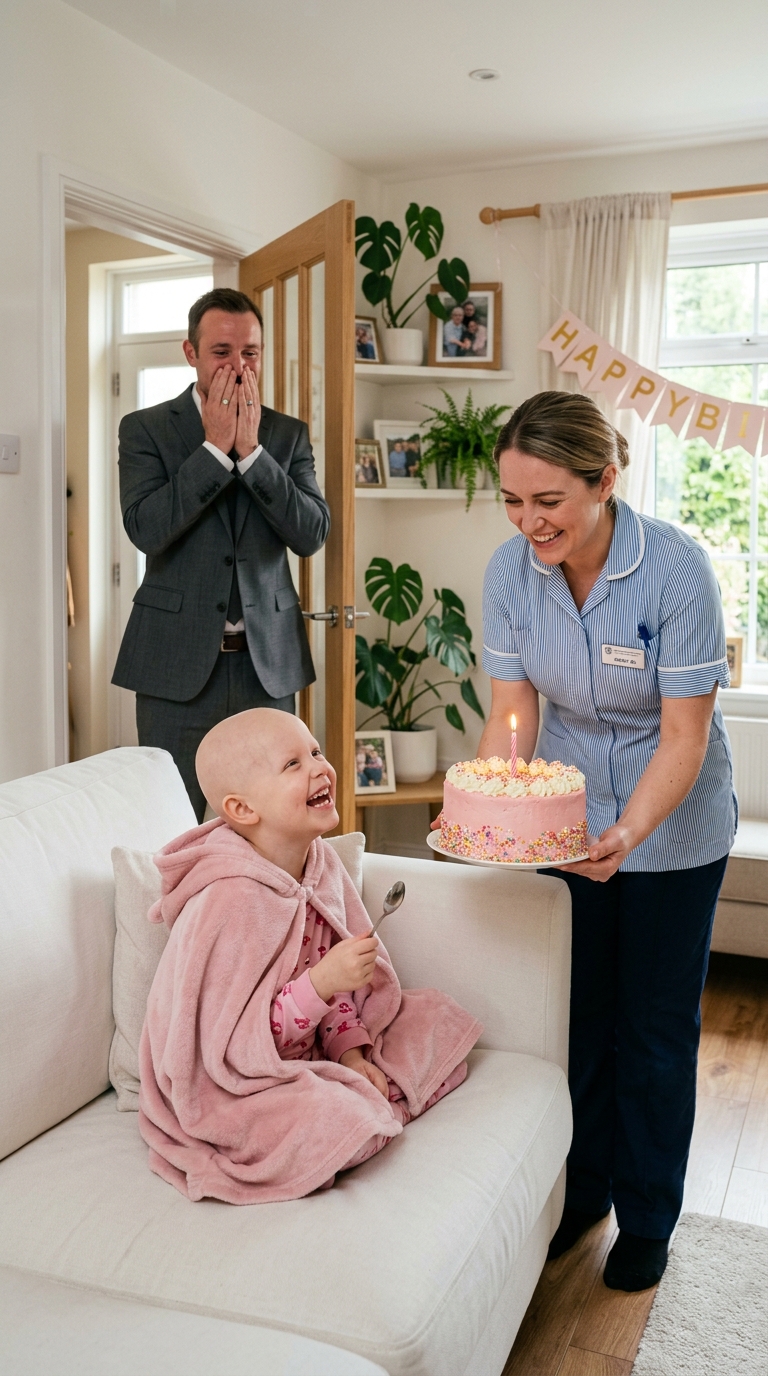
Every detail had purpose. Every room displayed wealth without restraint.
Yet none of it could purchase the one thing Jonathan needed most.
Time.
Time with his daughter, Isla.
When Dr. Becker finally delivered the news, Jonathan felt the floor disappear beneath him.
“We’ve tried everything,” the doctor said gently. “Treatments. Experimental trials. Specialists in three different countries. At best… she has a few months.”
Jonathan had handled billion-dollar negotiations without emotion. But nothing prepared him for watching his seven-year-old daughter slowly disappear.
The estate changed overnight.
Music disappeared. Visitors stopped arriving. Silence settled over the halls like permanent fog. Isla, once energetic and endlessly curious, became quiet. Her movements weakened. Her laughter vanished. Her golden hair lost its shine, her small body exhausted by an illness no one could explain—only attempt to manage. Jonathan refused to surrender.
He summoned experts from around the world. Funded experimental treatments. Flew Isla across borders in private jets. Money vanished faster than fuel—but hope faded every single time.
Then Rosa arrived.
She came through an agency, almost unnoticed. Mid-forties. Dark hair tied neatly back. Calm eyes. Steady hands. Unlike everyone else, she did not whisper or hover nervously. She did not treat Isla like fragile glass.
She treated her like a little girl.
One afternoon, Jonathan paused outside Isla’s bedroom and found Rosa sitting cross-legged on the floor, speaking softly.
“What are you doing?” he demanded.
“Sharing a story,” Rosa answered calmly. “About a hummingbird that never stops flying—even when the storm is strong.”
Jonathan dismissed it as harmless nonsense and walked away.
But something shifted.
Isla began drawing again. Asking questions. Smiling. Eating more. The doctors reported no measurable improvement—but Jonathan could see it clearly. Her spirit was waking up again.
Suspicion slowly crept into him.
He reviewed security recordings. Stood outside doors listening. Searched for anything strange.
Then one night, he heard singing.
Soft. Warm. Alive.
He stepped into Isla’s room and stopped cold.
Painted stones covered the floor, marked with symbols. Tiny figures made from twigs and fabric sat arranged like little protectors around the room. Isla’s face glowed with happiness.
“They protect my dreams,” she said proudly.
Jonathan snapped.
“This ends now,” he said sharply. “You’re filling her head with fantasies. Hope doesn’t cure disease.”
Rosa remained calm. “Connection does.”
He accused her of manipulation. Of interfering. Of replacing science with imagination.
She never argued.
“Your daughter is still fighting,” she said quietly. “But fighting requires meaning—not only medicine.”
That night, Isla slept peacefully for the first time in weeks. Jonathan did not sleep at all.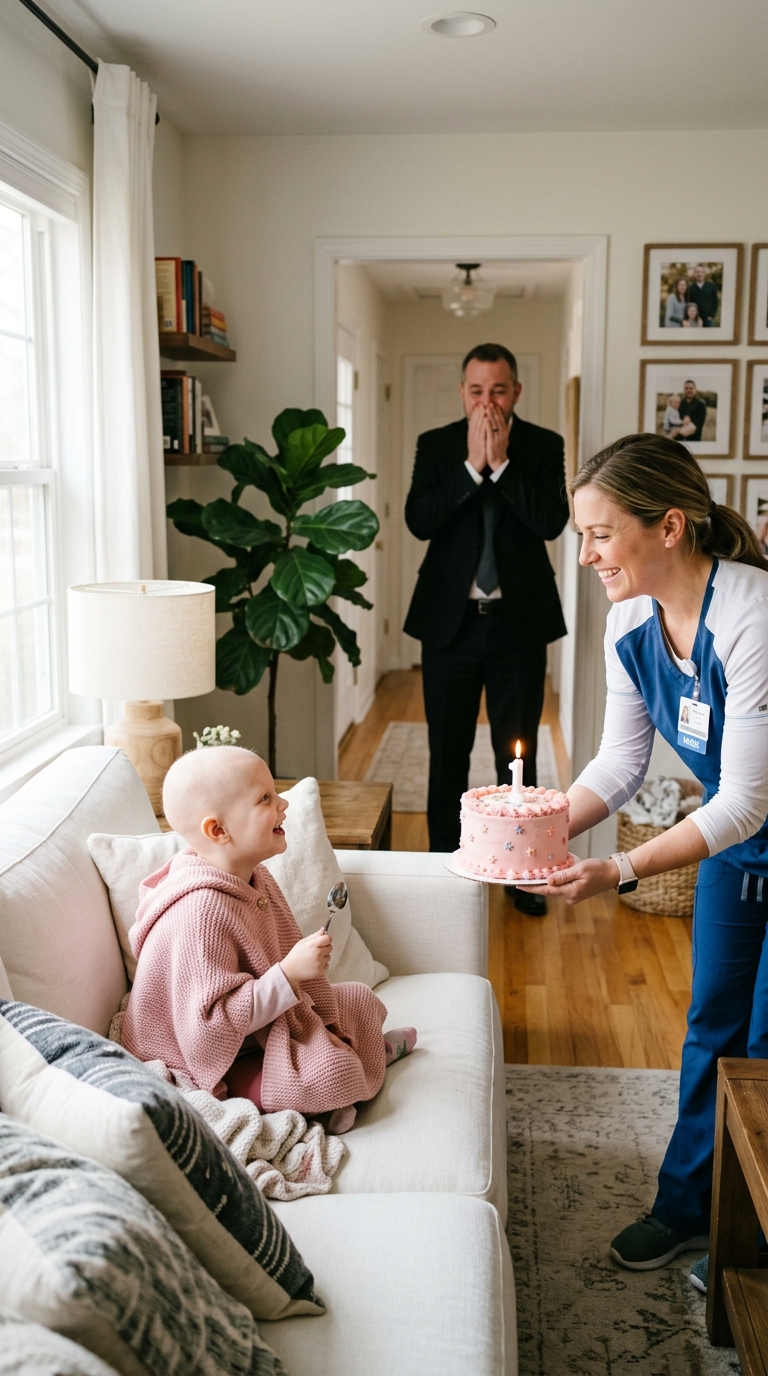
Over the following days, he ordered Rosa to stop completely. No more stories. No more dolls. No more rituals.
And slowly, Isla faded again.
Her appetite vanished. Her laughter softened. The light in her eyes dimmed.
The doctors noticed nothing different.
Jonathan did.
One evening, sitting beside Isla’s fragile body, Jonathan remembered her happiness—the way her fingers held those handmade dolls tightly. For the first time, doubt entered his certainty.
The next morning, he found Rosa in the kitchen.
“She’s getting worse,” he admitted quietly. “The doctors have no options left.”
Rosa waited silently.
“I want you to continue,” he said. “The stories. The… whatever it was you were doing.”
She nodded, but set one condition. “This is not pretend,” she said. “You must be part of it.”
Jonathan agreed immediately.
The days changed completely.
Rosa returned to Isla’s room—with Jonathan beside her. At first, his hands felt awkward painting stones, tying scraps of fabric, shaping tiny figures. But Isla’s happiness erased his discomfort.
Rosa spoke about her village, where healing came through community, stories, belief, and human connection. Jonathan listened—not with dismissal anymore, but with curiosity.
Slowly, Isla improved.
Her strength returned. Her laughter echoed through the mansion once again. Blood tests began showing changes no one could explain.
One afternoon, Dr. Becker stood watching Isla laugh in the garden.
“I don’t understand this,” he whispered. “But it’s real.”
The true turning point came one evening when Jonathan sat alone beside Isla.
She held a small twig doll carefully against her chest.
“Daddy,” she said softly, her voice calm and strong. “I’m not scared anymore. The hummingbird doesn’t give up.”
And suddenly, Jonathan understood.
The miracle was never the dolls.
It was belief.
It was meaning.
It was the will to live—nurtured instead of prescribed.
Months passed.
Isla did not simply survive—she flourished.
Doctors called it spontaneous remission. Jonathan called it a lesson.
His entire life changed afterward.
He created an organization combining medicine, storytelling, and holistic care for chronically ill children. His estate became a place built around collaboration instead of control.
Rosa stayed—not as an employee, but as family.
Years later, Isla grew into a strong, radiant young woman who never forgot the stories that helped save her life.
And Jonathan Hale—the man who once believed wealth could purchase anything—finally learned the truth:
The greatest form of wealth is not power.
It is presence.
Hope.
Love.
And the courage to believe when science alone is not enough
