

A Man Who Learned to Disappear
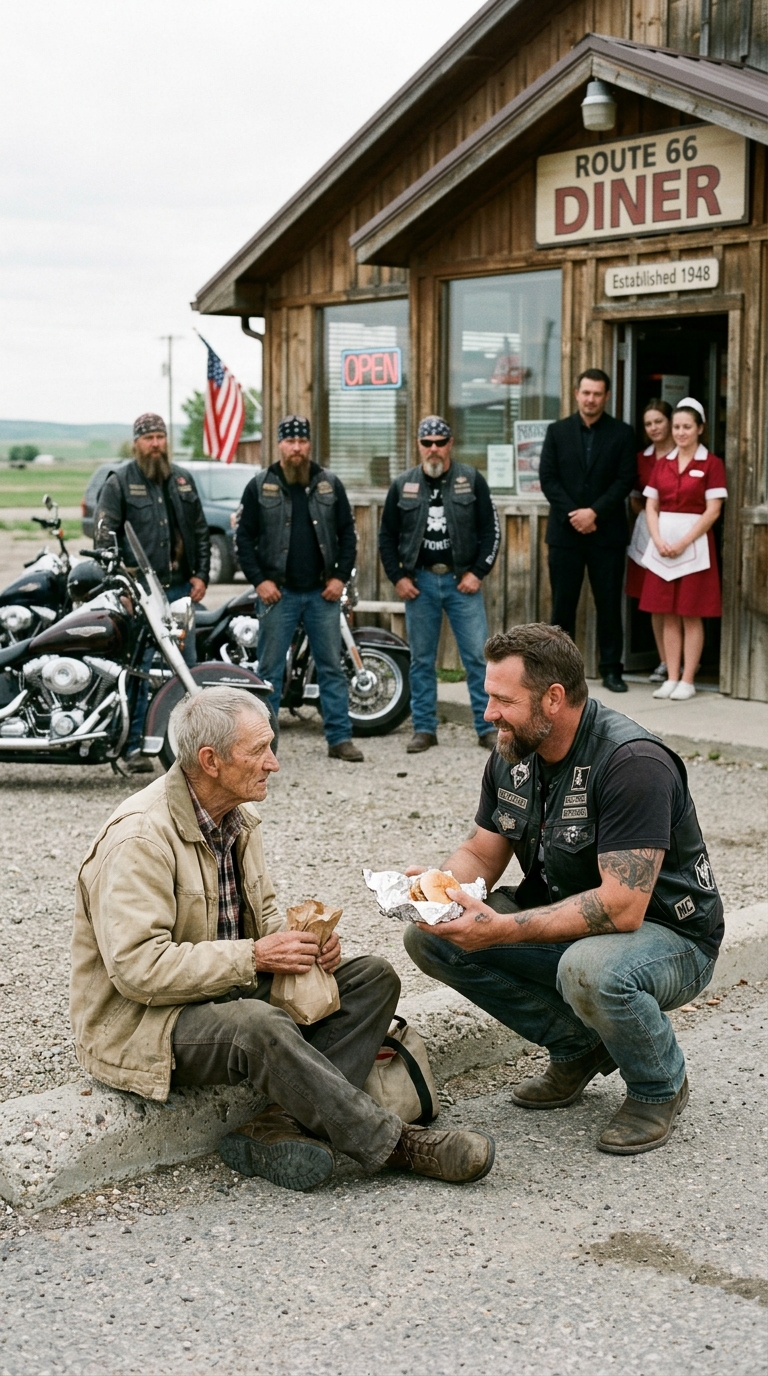
It was just after noon in a quiet Ohio town called Brookridge, a place where life moved slowly and people recognized each other more by routine than by name. The courthouse bell still rang each hour, and the streets carried a steady rhythm—neighbors passing by, shop doors opening and closing, and the smell of lunch drifting from a small diner on the corner. That Thursday, just outside the front window of Harper’s Diner, an elderly man sat on the edge of the curb.
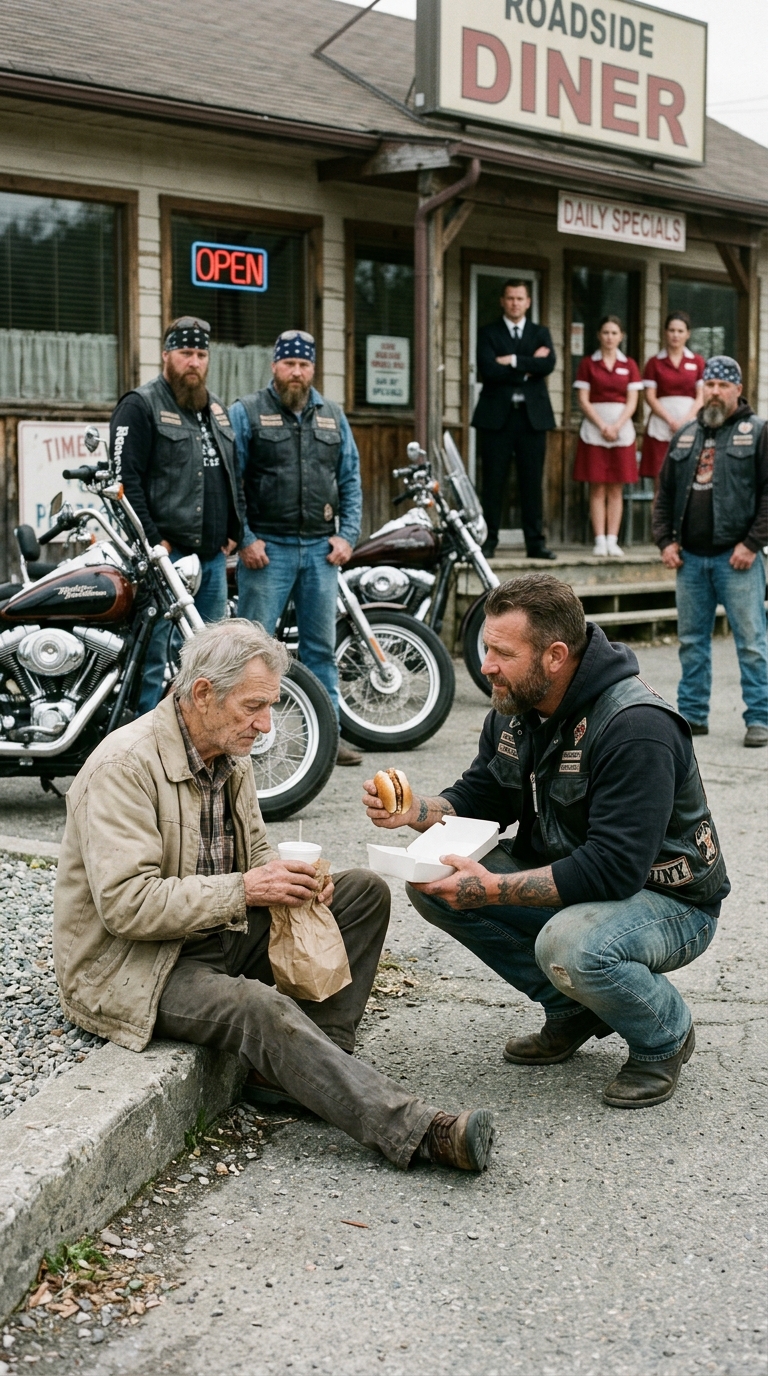
His name was Leonard Pierce. He was seventy-eight, though the deep lines on his face made him seem older, as if time had weighed more heavily on him than most. Gray hair slipped unevenly beneath a worn knit cap, and his coat hung loosely on his thin frame, clearly not made for him but accepted out of need. His hands trembled slightly as he held a small folded paper bag in his lap.
He wasn’t asking for anything.
He wasn’t speaking.
He didn’t even meet the eyes of people walking past.
He simply sat there, trying to take up as little space as possible, as though the world had already decided there was no place left for him.
Inside the bag was half a sandwich he had carefully saved. He had found it behind a grocery store, still wrapped, still edible if you didn’t look too closely. He folded it neatly, planning to make it last.
A few people noticed.
A woman slowed, frowned, then walked around him without saying a word. A man leaving the diner muttered something about “people like that” before heading to his truck. A teenager paused, lifted his phone, and quietly took a photo before slipping inside.
Leonard lowered his eyes.
Over the years, he had learned something important: if you made yourself small enough, people would eventually stop seeing you. And sometimes, being invisible felt safer than being noticed.
The Moment That Drew Attention
The stillness didn’t last.
A customer inside the diner complained.
Moments later, the door swung open, and the manager stepped out. Her name was Karen Whitlock, a woman in her early forties who had spent years building the diner’s reputation into something reliable and respected.
She stood over Leonard, arms tightly crossed.
“You can’t sit here,” she said, her tone firm with a hint of irritation. “You’re blocking the entrance.”
Leonard looked up slowly, blinking in the light.
“I’m not bothering anyone,” he said quietly, his voice soft and apologetic.
“That’s not the point,” she replied. “Customers don’t feel comfortable walking past you. You need to move.”
He nodded, not arguing.
He shifted slightly, moving just a few inches, as if hoping that would be enough. His knees protested, and he wobbled briefly before steadying himself.
From the street, a voice called out, “Find somewhere else to sit!”
Leonard flinched—not out of fear, but out of habit. He was used to voices like that. Over time, he had stopped reacting.
He simply held his paper bag a little tighter.
The Sound That Changed Everything
Then something new entered the scene.
A low, steady rumble echoed down the street.
It wasn’t loud or aggressive, but it carried enough presence to make people pause. Conversations slowed. Heads turned.
A motorcycle rolled up and stopped near the curb where Leonard sat.
The engine shut off.
Boots hit the pavement.
The rider removed his helmet slowly. He was a broad-shouldered man in his fifties, with a short gray beard and a calm, unreadable expression. His leather vest showed wear from years of use, not for style but from experience.
His name was Dalton Reeves.
He didn’t look around for attention.
He didn’t react to the crowd.
He simply walked toward Leonard.
Karen stiffened. “We don’t need more trouble,” she muttered under her breath.
Dalton said nothing.
He stopped in front of Leonard and studied him—not with judgment, but with quiet understanding.
Leonard looked up, confused.
Dalton slowly crouched down.
The tension in the air grew.
Someone whispered, “This isn’t going to end well.”
But Dalton didn’t raise his voice. He didn’t confront anyone.
Instead, he asked one simple question.
“Is that all you’ve had to eat today?”
Leonard hesitated, then nodded. “Yes, sir.”
The word sir sounded unfamiliar.
Dalton nodded once.
He reached into his saddlebag and pulled out a small takeout container. Steam still lingered when he opened it.
Inside was a fresh meal—untouched.
He set it gently on the curb between them.
Leonard stared at it, unsure.
Dalton didn’t rush him.
Instead, he sat down beside him.
Right there on the concrete.
Leather against pavement.
He picked up a fry, took a bite, and waited.
A Quiet Line Drawn
The scene puzzled everyone watching.
It wasn’t dramatic.
It wasn’t loud.
But something shifted.
Karen frowned. “You can’t just sit there like that,” she said.
Dalton broke the meal in half and held one portion toward Leonard.
Leonard’s hands trembled more now.
“You don’t have to,” he whispered.
Dalton met his eyes.
“I know.”
That was all.
No pressure.
No performance. Just presence.
From the side, someone muttered, “He’s making a scene.”
Another said, “They’re taking over the sidewalk.”
But Dalton didn’t react.
He simply sat there, sharing his food.
When Authority Arrives
A call had already been made.
Within minutes, a police car pulled up.
Officer Ryan Hale stepped out, calm but alert. He approached carefully, scanning the situation.
“What’s going on here?” he asked.
Voices answered at once.
“They won’t leave.”
“They’re causing a problem.”
“He’s been sitting here all day.”
Officer Hale turned to Dalton.
“Sir, I’m going to need you to move along.”
Dalton stayed seated. “I’m having lunch.”
“With him?” the officer asked.
“Yes.”
The officer turned to Leonard. “Do you know this man?”
Leonard shook his head. “No, sir.”
The situation hung in uncertainty.
Dalton stood slowly, not aggressively, but with purpose.
“Just give it a minute,” he said.
“Give what a minute?” the officer asked.
Dalton didn’t answer.
He simply waited.
The Arrival That Changed the Tone
Then the sound returned.
Another motorcycle.
Then another.
And then several more.
They arrived calmly, parking in a neat line. Riders stepped off, removing helmets one by one. Their vests weren’t flashy or threatening—just a quiet sign they belonged together.
They didn’t crowd.
They didn’t shout.
They simply stood behind Dalton.
Present.
Steady.
The officer’s posture softened slightly.
“This isn’t a gathering spot,” he said carefully.
One rider replied evenly, “We’re just here together.”
Dalton glanced at Leonard.
“Go ahead,” he said softly. “Eat.”
Leonard picked up the food.
That small act changed everything.
A Simple Truth Revealed
Dalton reached into his pocket and pulled out a receipt.
He handed it to Officer Hale.
The officer read it, then looked up.
“You already paid for a table inside?”
Dalton nodded. “By the window.”
The officer glanced through the diner glass.
There it was.
An empty table.
Reserved.
Paid for.
No rules broken.
No laws violated.
Only discomfort.
And discomfort wasn’t something he could enforce.
One rider spoke gently. “If he’s paid, can he sit inside?”
Karen hesitated.
Her expression shifted.
“…If he’s with you,” she said.
Leonard lowered his gaze.
Even kindness, it seemed, sometimes came with conditions.
Dalton extended his hand.
“Let’s go inside,” he said.
Leonard stared at it for a moment.
Then slowly, he took it.
A Seat That Meant More Than It Seemed
Inside the diner, everything changed.
Voices softened.
Eyes followed.
Leonard sat at the table by the window.
Sunlight touched the worn wood in front of him.
Dalton sat across from him, setting his vest aside, revealing only a simple shirt and a quiet presence.
A waitress approached carefully. “Coffee?” she asked.
“For both of us,” Dalton said.
Leonard hesitated. “I don’t have—”
Dalton gently interrupted.
“I know.”
No embarrassment.
No explanation.
Just understanding.
Two Lives, One Moment
They ate quietly for a while.
Then Leonard spoke.
“I used to work construction,” he said softly. “Thirty years.”
Dalton nodded. “That’s real work.”
Leonard looked at his hands. “They used to be steady.”
Dalton glanced at his own arms.
“Mine too,” he said.
No pity.
No heavy sympathy.
Just recognition.
The Gift That Stayed Behind
When the meal ended, Dalton stood and paid.
He returned and placed a small card on the table.
A phone number.
“They’re looking for someone to watch equipment at a site outside town,” he said. “It’s not heavy work.”
Leonard blinked.
“You don’t even know me.”
Dalton gave a small shrug.
“I know enough.”
Leonard’s voice trembled. “Why would you do this?”
Dalton paused at the door.
He looked back once.
“Because no one should be treated like they don’t belong.”
Then he walked out.
The riders followed.
Engines started.
And just like that, they were gone.
The Silence That Remained
Inside the diner, everything felt different.
The teenager who had taken a photo looked away.
The man who had shouted left quickly.
Karen stood behind the counter, quieter than before.
Leonard unfolded the card again.
His hands still trembled—but not from shame.
Outside, life continued.
Cars passed.
Doors opened.
Conversations resumed.
But something had changed.
A man who had tried to disappear now sat upright, visible in a different way.
Not exposed.
Not judged.
Just seen.
A Quiet Truth That Lingers
Sometimes dignity doesn’t arrive loudly.
It doesn’t demand attention.
Sometimes, it comes quietly.
It sits beside you.
It shares a meal.
It stays long enough to remind you that you still matter.
And when it leaves, it doesn’t take anything away.
It leaves something behind.
Something steady.
Something human.
A reminder that even in a world that moves too fast, there are still people willing to stop.
And sometimes, that’s enough to change everything.
The way we treat someone at their lowest often reveals more about us than it does about them, and choosing kindness in those moments quietly strengthens the world around us.
When we look beyond appearances and truly see another person, we begin restoring dignity that may have been worn down over time.
A single act of compassion, no matter how small, can interrupt a long chain of indifference and remind someone they are not invisible.
There is quiet strength in standing beside someone without needing recognition, letting actions speak where words cannot.
Communities grow stronger not through grand gestures, but through everyday choices rooted in fairness, patience, and understanding.
When we respond to hardship with respect instead of judgment, we create ripples that reach farther than we may ever see.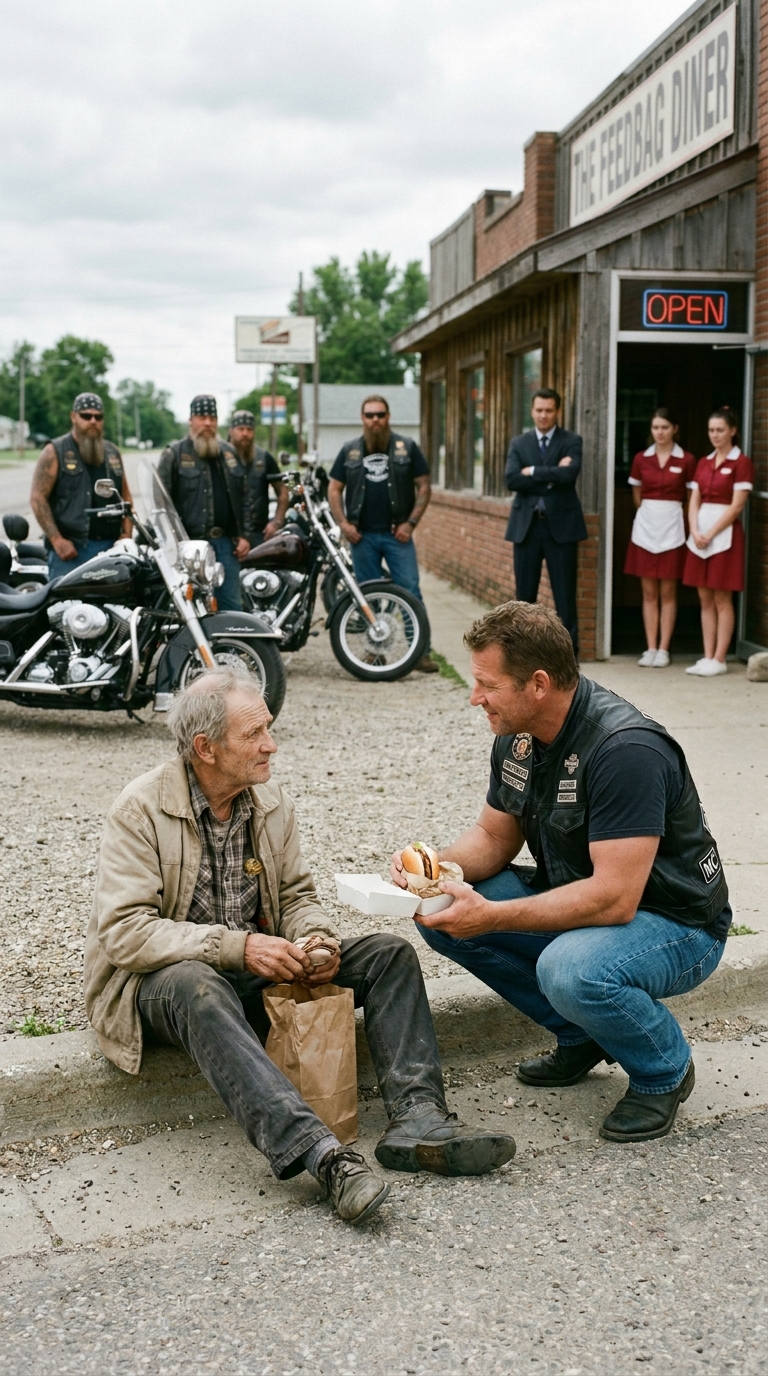
True character shows not in comfort, but in how we act when faced with another’s vulnerability.
Offering a seat, a meal, or simply presence can bridge distances that once felt impossible.
Kindness does not require wealth or power—only a willingness to care.
And sometimes, real change begins with a simple decision: to stop, to sit down, and to remind someone they are not alone.
