

I once believed love was something that revealed its truest form when everything else fell apart. I thought devotion was an automatic response, something that would instinctively rise when the person you loved was hurting or in danger. That innocent, desperate belief almost cost me my life.
My name is Rachel Monroe. For three years, I was the devoted, accommodating, and quietly proud wife of Andrew Monroe.

From the outside, we looked like a perfect suburban success story. He was an ambitious architect; I was a graphic designer who had stepped back to prepare our immaculate home for our first child. But the night my daughter was born was the night everything I believed about my marriage collapsed. It was the night I stopped confusing attachment with real love. It was a Tuesday in late October.
The air outside was sharp, carrying the faint metallic promise of rain. Inside, the house was warm, silent, and spotless. I was exactly thirty-eight weeks pregnant. My hospital bags were ready by the door. The nursery was painted a soft sage green, filled with folded blankets and a crib that still carried the scent of fresh wood.
I had spent the evening doing laundry, moving through nesting tasks with a restless urgency I couldn’t explain. The first contraction came at exactly 9:42 p.m. It wasn’t a small flutter or mild discomfort. It was a deep, tightening force in my lower back that surged forward, wrapping around my abdomen like iron.
I froze mid-fold, one hand pressed hard against the warm dryer. I closed my eyes and breathed through it, inhaling lavender detergent, telling myself it was nothing serious. Braxton Hicks, the books had called it.
False labor. Everyone—from my mother to my doctor—had warned me that first labors take forever. They all said confidently, “You’ll know when it’s real.”
For twenty minutes, I tried to convince myself I was imagining it. But by 10:10 p.m., the pain had established a relentless rhythm.
These were not random cramps. They came like waves, stealing my breath and forcing my body forward. I found myself gripping the kitchen counter, knuckles white, counting the intervals. Forty-five seconds of crushing pressure, then four minutes of trembling relief. The gaps were shrinking. My body was taking over, ignoring logic that insisted it was too early.
I shuffled into the bedroom, the carpet soft beneath my feet, and sat heavily on the bed’s edge. My hands shook so violently I nearly dropped my phone while unlocking it.
I tapped Andrew’s name. It rang once. Twice. Three times.
He was supposed to be at a casual dinner with his parents just across town. They were leaving the next morning for a weekend cabin trip—one he had insisted on, saying, “First babies are always late anyway.”
On the fourth ring, he answered. Background noise spilled through the speaker—clinking silverware, low conversation, his father’s loud laugh.
“What’s up?” Andrew asked, casual and distracted, like I had interrupted something trivial.
“Andy,” I said softly, already breathing differently, panting as another contraction built. “I think… I think I’m in labor.”
There was a pause. The background noise felt louder. Then he sighed.
“Already?”
That single word felt like a slap.
“Yes,” I snapped as pain surged again. “I’m serious, Andrew. It hurts. I need you to come home. Now.”
“Rachel,” he said in that slow tone he used when he thought I was overreacting. “You’re probably just uncomfortable. First time, you don’t know what it feels like yet. Drink water and lie down.”
“I can’t lie down,” I whispered, gripping the sheets. “It hurts too much. Where are you?”
“I’m still with my parents,” he said casually. “We’re leaving early tonight instead of tomorrow. Beat traffic. You’ll be fine. The hospital is close.”
The words didn’t fully register at first.
“You’re… leaving?” I said slowly. “Andrew, my water could break anytime.”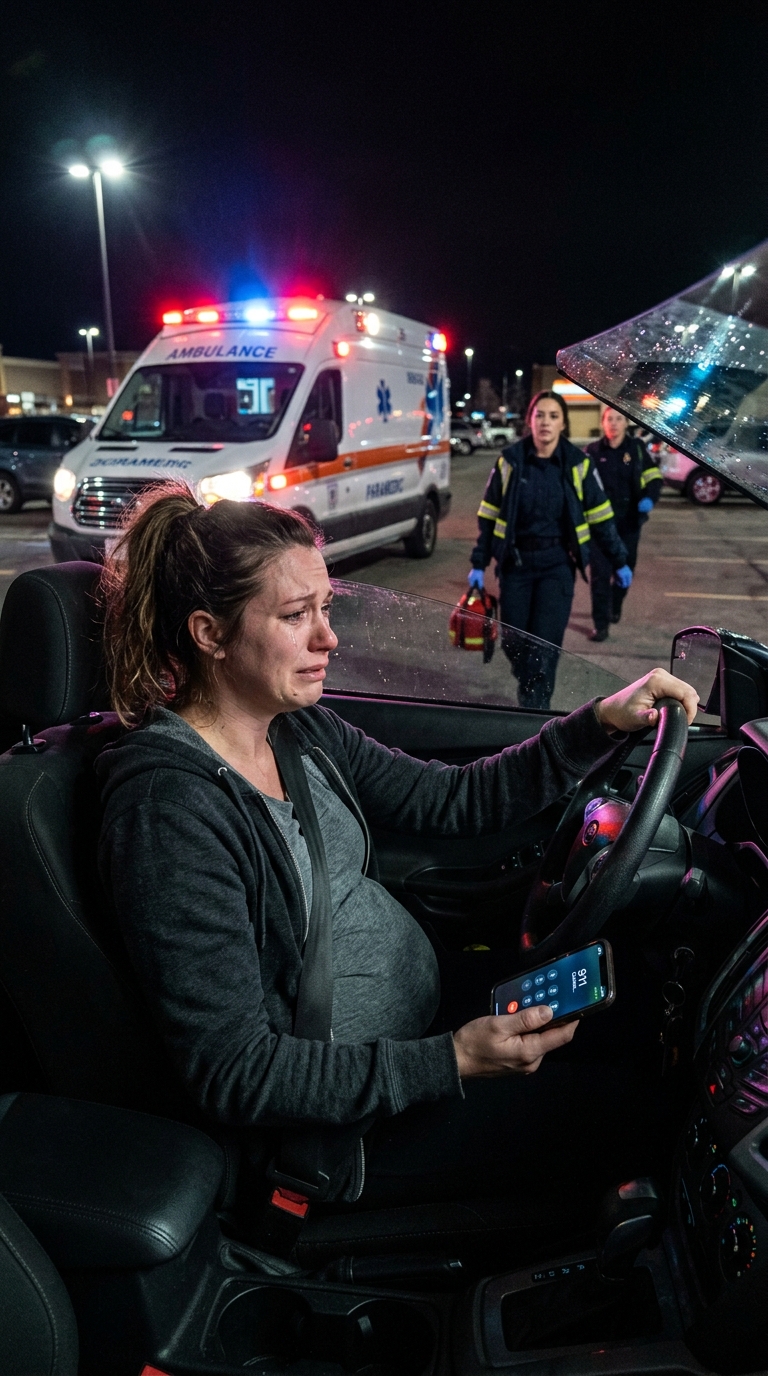
He laughed.
That laugh shattered something in me.
“You can get to the hospital yourself if it happens,” he said lightly. “You’re independent. Drive carefully. I’ll check my phone later.”
Something inside me went completely hollow.
“Andrew, I’m scared,” I whispered.
“You’re being dramatic,” he replied flatly. “Call me when you’re actually at the hospital.”
The line went dead.
I stayed frozen with the phone against my ear as silence swallowed the house. Then another contraction hit—violent, consuming—and I cried out, not like a person, but something primal. I was alone, and I knew it.
I don’t remember deciding to leave. My mind split into two parts: the terrified woman and the instinctive mother who refused to give up.
I remember forcing on shoes. I remember dragging my hospital bag because lifting it hurt too much. The house felt like a tomb. The clock in the hallway sounded like a countdown.
He left. He laughed, and he left. I stumbled into the night, fumbling my keys, dropping them twice before unlocking my car. Getting inside was agony. My belly pressed against the wheel. My hands shook so badly the keys rattled.
I started the car. Just breathe, I told myself. You can do this.
I drove out, tires crunching leaves. Streetlights blurred overhead. Three blocks later, a contraction hit so hard my vision went white.
I slammed the brakes, the car jerking into an empty pharmacy lot. I collapsed over the wheel, gasping.
The world was silent except for rain starting to fall.
I called my sister. Voicemail. I called my friend. Voicemail.
Then I called the hospital.
“I’m in labor,” I gasped. “I’m alone. I can’t drive.”
“Stay calm,” the nurse said firmly. “Where are you?”
Before I could answer, a wave of pressure hit. Warm fluid soaked through me.
“My water broke,” I sobbed.
“Do not drive,” she said urgently. “I’m sending—”
The call dropped.
“No Service.”
I was alone in a storm-dark parking lot, my body forcing me toward birth.
Headlights swept across the lot. I flinched—but the car only turned away. Relief vanished as another contraction hit.
Time blurred. Rain intensified. My body demanded I push.
At 1:06 a.m., my phone lit up.
Andrew.
It rang again and again. I didn’t answer. I couldn’t.
Then a text came.
ANDREW: “Where are you? Answer me right now. I called the hospital, you aren’t there. I’m turning around. Pick up the phone, Rachel.”
A contraction tore through me so violently I screamed.
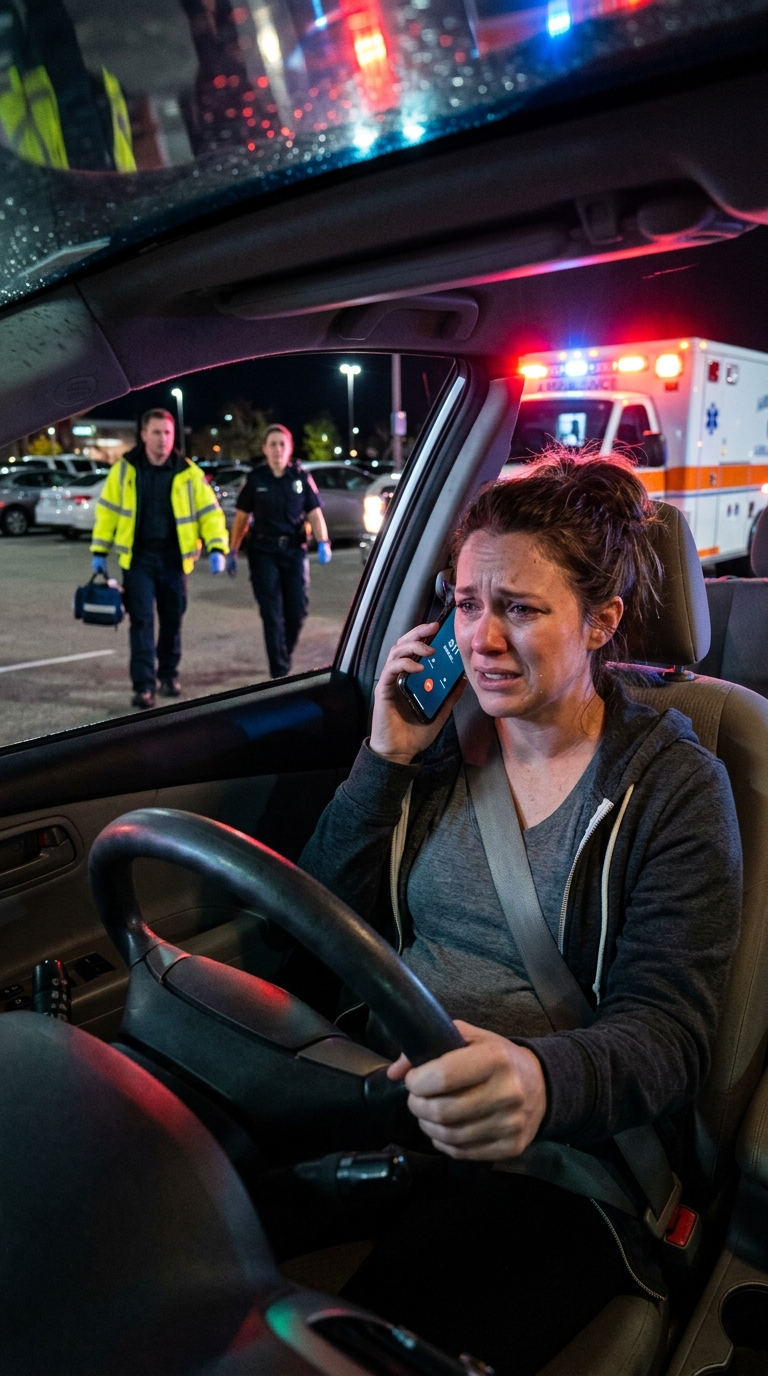
I finally dialed 911.
“I’m alone in labor,” I sobbed. “My water broke. I can’t drive.”
“Help is coming,” the operator said calmly. “Stay with me.”
Red and blue lights flooded the parking lot.
A paramedic opened my door. “Hi, I’m Tanya.”
I was lifted out, soaked and shaking. “We’ve got you,” she said firmly. “You’re not alone.”
At the hospital, chaos moved fast. “She’s crowning!” someone shouted.
I was rushed into a room.
Then Andrew appeared.
“Rachel!” he shouted. “Why didn’t you answer? Where were you?!”
I looked at him as another contraction hit.
“You laughed,” I said through pain. “You left me.”
The room went silent.
They moved me forward. He tried to follow.
“Sir, wait outside,” security said.
The doors shut.
Hours blurred into pain, breath, and strength I didn’t know I had.
“I can’t,” I cried.
“Yes, you can,” a nurse said. “Meet your baby.”
I pushed through everything I had left.
Then silence.
A cry filled the room.
“It’s a girl,” they said.
They placed her on my chest. And everything inside me finally broke open into something whole.
Later, Andrew entered.
“I’m sorry,” he said. “I didn’t know.”
I looked at him calmly.
“You laughed. You left. I believed you.”
“I made a mistake,” he begged.
“No,” I said softly. “You made a choice. So did I.”
I didn’t leave that night. But something already ended there.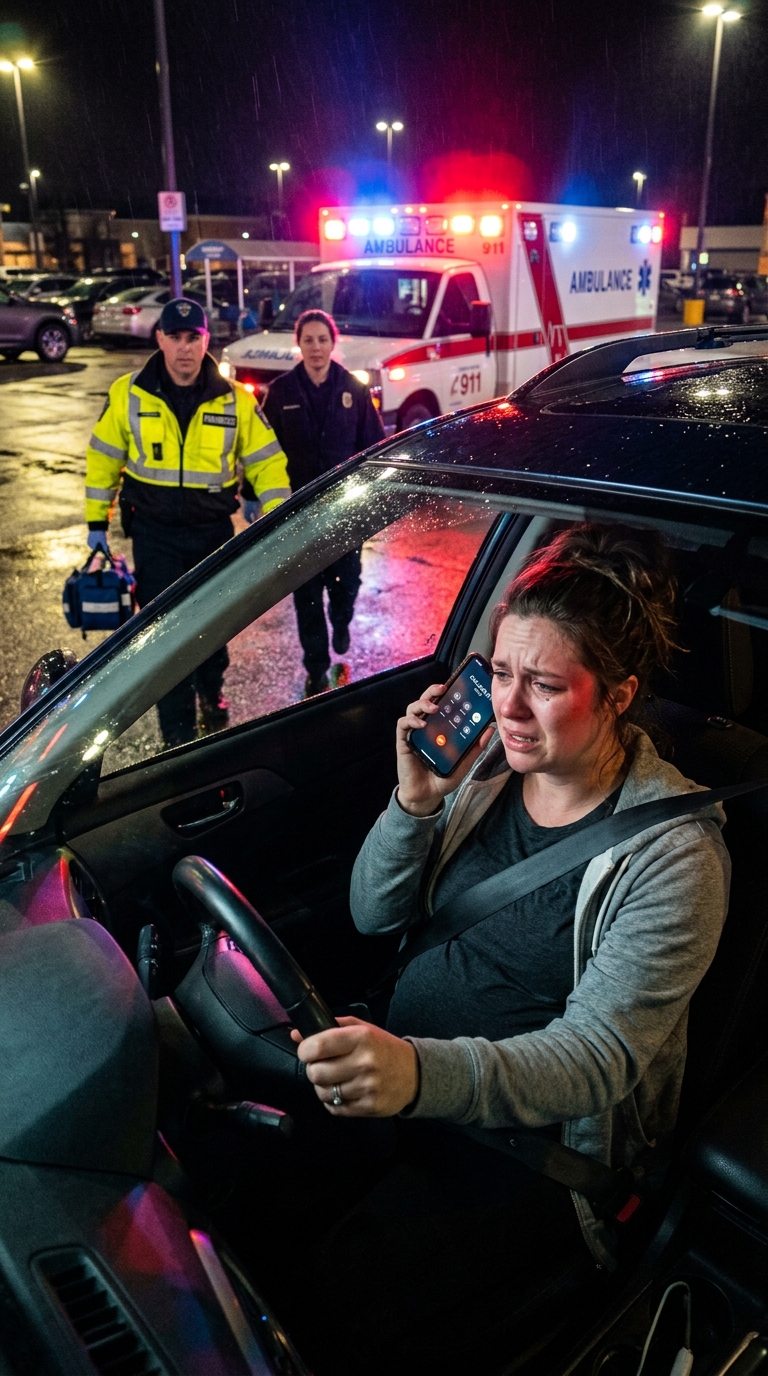
Three days later, I left the hospital with my daughter, Lily.
Months passed. Divorce followed. He became a weekend father.
Today, Lily is three. We live in a quiet home filled with light and laughter.
I teach her one truth: love shows up.
And sometimes, late at night, when my phone rings, I look at it—and I remember the silence I chose over a voice that once taught me how to leave myself behind.
